
Philipp S. Simon
Chemist Project Scientist

Research Interests
I am interested in understanding metalloproteins with an active catalytic site with a focus on photosynthetic proteins, as well as the development of biomimetic catalytic systems relevant to the conversion and storage of renewable energies.
Keywords:
photosynthesis; protein function; light induced charge separation; proton coupled electron transfer; catalytic reactions; protein binding sites of substrates and cofactors; redox potentials; solar fuels; and design of catalytic systems.
Methods:
infrared spectroscopy; time-resolved spectroscopy; fluorescence methods; serial femtosecond crystallography; X-ray absorption and emission spectroscopy; and setup development.
Recent Publications
Related News
Ultrabright, Ultrashort X-ray Bursts Capture Enzymes in Action
Frame-by-frame ‘molecular movies’ reveal previously invisible intermediates, paving the way for potential new cancer treatments and antibiotics.
New Method Reveals Evolution of a Copper Catalyst
A new method devised by researchers from SLAC National Accelerator Laboratory and Berkeley Lab enables observation of the few copper atoms that actively participate in catalytic reactions while ignoring the rest. The technique can be applied to studying a wide range of energy technologies.
Congratulations to Biosciences Area Director’s Award Recipients
Several Biosciences Area personnel are among the 2024 recipients of Berkeley Lab Director’s Achievement Awards. The program recognizes outstanding contributions by employees to all aspects of Lab activities.

Research Interests
My research interests focus on the development of advanced cellular models to elucidate the mechanisms underlying disease and infection pathogenesis.
Recent Publications
No publications are available at this time.
Related News
Biosciences FY26 LDRD Projects
The Laboratory Directed Research and Development program at Berkeley Lab produces cutting-edge research for the DOE and the nation. Read about the Biosciences Area–led projects and multi-Area collaborations with Biosciences co-investigators receiving funding this cycle.

Research Interests
Piya is a team member of the DOE BRaVE-funded Phage Foundry project for systematic characterization of phages and phage-tail like bacteriocins as a powerful countermeasure to tackle the antimicrobial resistance pandemic. He is currently interested in identifying factors that modulate interactions between phages and pathogenic bacteria so that machine learning tools can be employed to predict interaction between novel phages and their bacterial hosts. He is applying CRISPR and Dubseq technologies to study how genes affect fitness in the context of phage infection.
Recent Publications
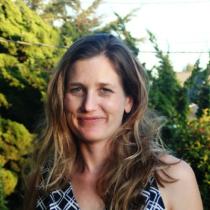
Biography
Jamie Inman, PhD, is a scientist whose work focuses on understanding how genetically and environmentally complex biological systems respond to stress and perturbation. She received her PhD in Comparative Biochemistry from the University of California, Berkeley, where she trained under the guidance of Mina Bissell and Fenyong Liu.
Dr. Inman’s research integrates advanced experimental models, multi-omic data generation, and predictive computational frameworks to study biological responses across molecular, cellular, tissue, and organismal scales. Her work is driven by the goal of understanding, measuring, and ultimately controlling how complex systems respond to environmental, infectious, chemical, and radiation-associated stressors. By combining systems biology, engineered model systems, and data-driven analysis, she aims to identify mechanisms of resilience and susceptibility that can inform new strategies for prediction, intervention, and therapeutic development.
Research Interests
Systems Biology of Stress and Perturbation
Our research program focuses on understanding how complex biological systems respond to stressors such as radiation, chemical exposures, infection-associated signals, and immune challenges. We are particularly interested in how these responses are shaped by host genetics, environmental context, tissue organization, and prior biological state.
Genetic Diversity, Susceptibility, and Resilience
We leverage genetically diverse model systems to uncover variation in susceptibility, resilience, and disease outcomes. By studying biological responses across diverse genetic backgrounds, we aim to identify mechanisms that explain why individuals, tissues, or populations respond differently to the same stressor or therapeutic intervention.
Multi-Omics and Functional Phenotyping
Our work integrates transcriptomic, microbiome, cytokine, metabolomic, hematologic, imaging, and physiological datasets with functional readouts. This systems-level approach allows us to connect molecular signatures with measurable biological outcomes and to identify biomarkers of injury, adaptation, resistance, and recovery.
Radiation Biology and FLASH Radiotherapy
A major component of the program is radiation biology, with an emphasis on how dose, dose rate, oxygen dynamics, redox biology, and tissue architecture influence radiation responses across scales. We combine engineered 2D and 3D organotypic cultures with in vivo models to dissect mechanisms of radiation injury, normal tissue sparing, tumor response, and the biological basis of FLASH radiotherapy.
Non-Invasive Diagnostics, Sensing, and Microphysiological Systems
We develop diagnostic, biodosimetry, and sensing approaches aimed at real-world deployment, including blood-based, saliva-based, spectroscopic, hyperspectral, volatile organic compound, and machine learning-enabled assays. These efforts are designed to support rapid, minimally invasive assessment of exposure, injury, infection, and physiological state.
Our research also extends to the development and application of advanced instrumentation and microphysiological systems that enable high-resolution, multimodal measurement of dynamic biological processes. By integrating sensing technologies with human-relevant experimental models, we aim to capture biological responses in real time and translate complex signals into actionable indicators of health, injury, and recovery.
Predictive Modeling, Digital Twins, and AI-Enabled Biology
A central goal of the program is to make biological systems more predictable and controllable. We use machine learning, systems modeling, and physics-informed approaches to translate complex biological data into actionable predictions. These frameworks support applications ranging from medicine and radiation response prediction to engineered tissues, environmental health, and industrial bioprocessing.
Recent Publications
Related News
New Research Further Elucidates Health Impacts of Thirdhand Smoke
By combining experimental models, genomics, and AI-enabled analytics, researchers at Berkeley Lab are beginning to construct predictive frameworks that elucidate how environmental exposures interact with genetic susceptibility to influence disease risk.
Biosciences FY26 LDRD Projects
The Laboratory Directed Research and Development program at Berkeley Lab produces cutting-edge research for the DOE and the nation. Read about the Biosciences Area–led projects and multi-Area collaborations with Biosciences co-investigators receiving funding this cycle.
A New Genetic Hallmark for Predicting Breast Cancer Outcomes
Biosciences researchers have used Collaborative Cross mice, a mouse model system designed to mimic the diversity of human populations, to identify a set of genetic factors that could help refine treatment approaches for a fast-growing form of breast cancer.

Divisions
- Science Programs
Secondary Affiliation:
Environmental Genomics and Systems Biology
- Comparative and Functional Genomics
Research Interests
I study plant–microbial interactions using synthetic biology and functional genomics. I am particularly interested in developing platform technologies to uncover gene functions and regulatory mechanisms in rhizobacteria and applying the knowledge to engineer rhizosphere environments.
Recent Publications
Related News
Biosciences FY25 LDRD Projects
The projects of 23 Biosciences Area scientists and engineers received funding through the FY25 Laboratory Directed Research and Development (LDRD) program.
Biosciences Area FY24 LDRD Projects
The projects of 21 Biosciences Area scientists and engineers received funding through the FY24 Laboratory Directed Research and Development (LDRD) program.

Research Interests
Research areas include CO2 bioconversion, carbon optimized biological systems, hydrogen biotechnology, and sustainable aviation fuels.
Recent Publications

Divisions
Earth & Environmental Sciences Area
Secondary Affiliation:
Environmental Genomics and Systems Biology
- Molecular EcoSystems Biology
Research Interests
Kolby Jardine studies plant and microbial metabolism by working at the interface of biochemistry, ecology, and atmospheric sciences (Biochemical Ecology).
The primary goal of the research is to characterize quantitative relationships between biochemical, optical, and volatile organic signals emitted by plants during climate extremes in order to characterize processes and mechanisms of potentially high global importance. This presents exciting opportunities for the development of new methods for the continuous local and global monitoring of the physiological, energetic, and oxidative status of plants and ecosystems and their associated cycling of carbon and water.
Field, greenhouse, and laboratory methods are developed for the quantification of carbon dioxide and gas-phase volatile organic compound concentrations, fluxes, and isotopic composition from leaves to ecosystems and seconds to seasons. Methods include IR spectrometry, proton transfer reaction mass spectrometry (PTR-MS), and thermal desorption-gas chromatography-mass spectrometry (TD-GC-MS).
Recent Publications
Related News
Bioscientists to Receive DOE Funding for Biomanufacturing and Microbiome Research
Biosciences researchers are among the recipients of four new DOE awards. Two awards will focus on reducing carbon emissions while producing bioenergy. The other two are aimed at understanding the role of microbiomes in the biogeochemical cycling of elements like carbon.

Research Interests
Professor Schepartz’s research group is interested in questions that span the chemistry-biology continuum. We seek to establish new knowledge about the chemistry of complex cellular processes and apply this knowledge to design or discover molecules–both small and large–with unique or useful properties. We apply the tools of organic synthesis, biochemistry, biophysics, and structural, molecular, and synthetic biology in our work. Current projects focus on (1) repurposing the ribosome to biosynthesize sequence-defined chemical polymers and polyketides; (2) exploring and improving novel tools for trafficking proteins to the cytosol and nucleus for therapeutic applications; (3) understanding the mechanism by which chemical information is transported through cellular membranes; and (4) developing new probes and fluorophores to image organelle dynamics at super-resolution for highly extended times and in multiple colors.
Recent Publications

Biography
Lydia holds a bachelor’s degree in Food Science & Biotechnology, a master’s degree in Biotechnology, and a Ph.D. in Environmental Microbiology from the University of Natural Resources and Life Sciences, Vienna. She completed her first postdoctoral training at the Bioenergy and Sustainable Technologies research center in Austria, and joined Berkeley Lab in 2019 for her second postdoc at the Joint Bioenergy Institute (JBEI) before transitioning to her current scientist role.
Research Interests
Specializing in anaerobic microbiology and sustainable bioenergy research, her work centers on harnessing anaerobic microbial communities to transform a variety of waste streams—including marine seaweed, industrial residues, and syngas—into renewable fuels, chemicals, and biomanufacturing products.
Lydia’s research advances sustainable solutions for bioenergy and decarbonization. She leads projects that bridge fundamental microbial ecology, bioprocess development, and scalable biomanufacturing.
- Anaerobic microbiology
- Environmental microbiome
- Gas fermentation
- Adaptive laboratory evolution
- Bioprocess development
- Biomanufacturing
Programs & Initiatives
Imagine a world where waste carbon emissions are transformed into sustainable aviation fuels, dramatically reducing our carbon footprint and reducing our dependence on fossil fuel imports.
The ARPA-E funded IGNIITE project aims to develop a scalable and sustainable carbon conversion process to minimize greenhouse gas emissions in the aviation sector. The approach leverages the microbial conversion of waste-derived syngas into carboxylic acids as a precursor for sustainable aviation fuels.

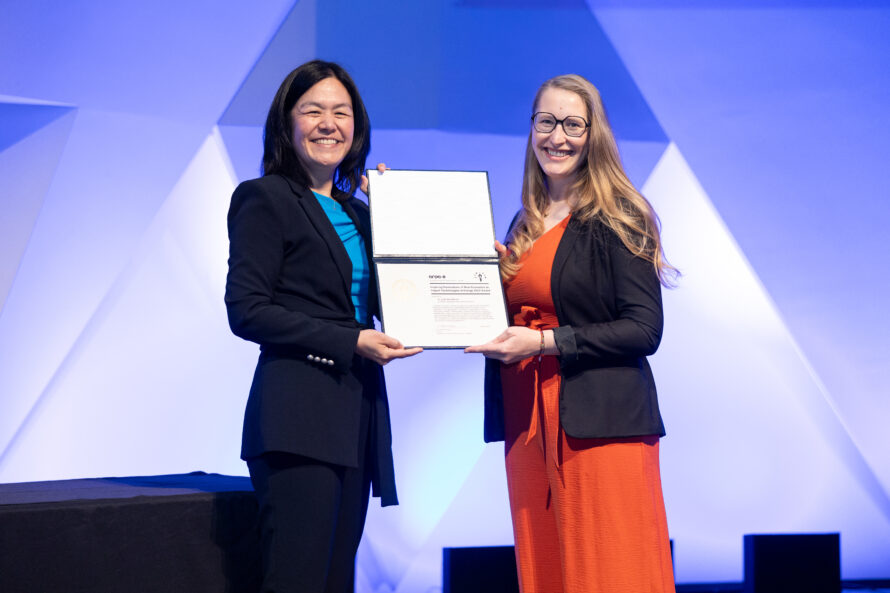
Lydia Rachbauer, a postdoctoral researcher at the Joint BioEnergy Institute (JBEI) in the Biosciences Area’s Biological Systems and Engineering Division was selected for first place and people’s choice prizes in the inaugural Bay Area Research SLAM competition on October 28. Rachbauer delighted the audience and judges with her three-minute story on utilizing the microbes found in fish guts to convert seaweed into sustainable biofuels.
Recent Publications
Related News
Biosciences FY25 LDRD Projects
The projects of 23 Biosciences Area scientists and engineers received funding through the FY25 Laboratory Directed Research and Development (LDRD) program.
Biosciences Area FY24 LDRD Projects
The projects of 21 Biosciences Area scientists and engineers received funding through the FY24 Laboratory Directed Research and Development (LDRD) program.
Rachbauer Wins First Place at Bay Area Research SLAM Competition
Lydia Rachbauer, a postdoctoral researcher at the Joint BioEnergy Institute (JBEI) in the Biosciences Area’s Biological Systems and Engineering Division was selected for first place and people’s choice prizes in the inaugural Bay Area Research SLAM competition on October 28. Rachbauer delighted the audience and judges with her three-minute story on utilizing the microbes found in fish guts to convert seaweed into sustainable biofuels.

Research Interests
The role of microorganisms in the rhizosphere priming of soil organic matter decomposition
I am interested in physiological, biochemical and evolutionary aspects of plant-microbial interactions and how these interactions mediate biogeochemical cycles. Plant-soil-microbial crosstalk is operated through complex nutrient exchanges, where plant-released exudates can be consumed by rhizosphere communities. This can mediate microbial metabolism triggering microbial response that may be involved in nutrient stabilization/destabilization in soils – rhizosphere priming. I am using genomic analysis of a rhizosphere community to define metabolic traits that outline mutualistic relationships between microorganisms and plants in soil (e.g. extracellular enzymes, nutrient transporters). I am also using exometabolomic analysis and profiling of exoenzymes activities to evaluate what microbes uptake from the plant-exuded compounds, and how they respond to the plant exudation through release of metabolites and changing exoenzymatic activities.
Recent Publications
Related News
Biosciences FY26 LDRD Projects
The Laboratory Directed Research and Development program at Berkeley Lab produces cutting-edge research for the DOE and the nation. Read about the Biosciences Area–led projects and multi-Area collaborations with Biosciences co-investigators receiving funding this cycle.
Congratulations to Biosciences Area Director’s Award Recipients
Each year, the Berkeley Lab Director’s Achievement Award program recognizes outstanding contributions by employees to all aspects of Lab activities. Several Biosciences Area personnel are among the 2025 honorees.
Plants Use Signaling Molecules to Fine-tune Their Microbiomes
Researchers have identified several key compounds that shape the microbial communities dwelling around plant roots and soil, opening up the possibility for agricultural strategies that precisely and sustainably improve plant health and crop yields.
Building: 091, Room 0250C
Mail Stop: Donner
Phone: 510-486-7106
Fax: 510-486-7080
AGaudin@lbl.gov
https://gaudin.ucdavis.edu/
Research Interests
We explore how diversification and healthy soil ecosystems can help agriculture meet its sustainability and resilience goals. We integrate concepts and methodologies from various disciplines to measure outcomes of ecological intensification strategies and linkages between diversification, soil health and ecological resilience. We also study plant-microbe interactions in the rhizosphere and the ecological functions central to crop production in agroecological systems.
Recent Publications
Related News
UC Davis, Berkeley Lab Team up to Advance Green Agriculture
Three University of California, Davis, Faculty Fellows have been awarded $25,000 each to spearhead cross-campus research projects with Berkeley Lab scientists in the field of agricultural decarbonization. With agricultural activities contributing over 10% of the United States’ total greenhouse gas emissions, the sector is a prime target for lowering emissions and addressing the climate crisis. The teams will explore innovative methods to remove and store excess carbon dioxide from the atmosphere—a practice known as carbon sequestration—and minimize energy consumption in crop production.

Research Interests
functional genomics, in vivo transgenic mouse assay
Programs & Initiatives
Recent Publications
Related News
Biosciences FY26 LDRD Projects
The Laboratory Directed Research and Development program at Berkeley Lab produces cutting-edge research for the DOE and the nation. Read about the Biosciences Area–led projects and multi-Area collaborations with Biosciences co-investigators receiving funding this cycle.
AI Helps Decode Gene Regulation
A combination of comprehensive experiments and machine learning is uncovering hidden complexities of gene expression during development.
Biosciences FY25 LDRD Projects
The projects of 23 Biosciences Area scientists and engineers received funding through the FY25 Laboratory Directed Research and Development (LDRD) program.


