
Peter Andeer
Computational Biologist Research Scientist
Building: 091, Room 0110D1
Mail Stop: 91R0183
Phone: 510-495-8732
pfandeer@lbl.gov
https://eco-fab.org/
Research Interests
EcoFAB and EcoBOT development, environmental microbiology including plant-microbial interactions
Recent Publications
Related News
Meet EcoBOT: The Autonomous Lab Standardizing Plant-Microbe Research
Berkeley Lab’s new self-driving laboratory, EcoBOT, automates complex plant experiments to eliminate human error, solve biology’s replication crisis, and accelerate bioenergy research.
EcoFABs Could Help Fuel AI in Agriculture
A first-of-its-kind global study showed that EcoFABs can deliver consistent results across labs on three continents, supported by open protocols, tools, and datasets. The reliable, large-scale data EcoFABs generate are ideal for training AI, which could help accelerate discoveries in crop development, soil health, and agriculture.
Biosciences FY26 LDRD Projects
The Laboratory Directed Research and Development program at Berkeley Lab produces cutting-edge research for the DOE and the nation. Read about the Biosciences Area–led projects and multi-Area collaborations with Biosciences co-investigators receiving funding this cycle.
Research Interests
- Unravelling the relationship between structure, dynamics and function of enzymes using
- Time-resolved structural studies at X-ray free-electron lasers (XFEL)
- Simulating biological systems using Molecular Dynamics/Quantum mechanical methods
- X-ray crystallography data analysis – developing new methods for active sites of metalloenzymes
- Current systems of interest include Photosystem II, a multi-subunit membrane enzyme catalyzing the water oxidation reaction.
Recent Publications
Related News
Ultrabright, Ultrashort X-ray Bursts Capture Enzymes in Action
Frame-by-frame ‘molecular movies’ reveal previously invisible intermediates, paving the way for potential new cancer treatments and antibiotics.
Mapping Photosynthesis for a Brighter Future
In this Q&A, MBIB researchers Jan Kern and Asmit Bhowmick delve into the discoveries from their recent structural biology studies of the photosynthetic apparatus in plants and bacteria.
Congratulations to Biosciences Area Director’s Award Recipients
Several Biosciences Area personnel are among the 2024 recipients of Berkeley Lab Director’s Achievement Awards. The program recognizes outstanding contributions by employees to all aspects of Lab activities.

Research Interests
Bioenergy and Biomanufacturing by combining synthetic biology and metabolic engineering to develop microbial systems for better utilization of biomass and gaseous one-carbon substrates (CO2 and CH4). Further, redirecting the enhanced carbon utilization towards next-gen biofuel, green chemicals or biopolymer production.
Media
A Day in the Half Life Podcast: Biomanufacturing: Making Stuff with Microbes
YouTube video: Berkeley Lab in the fight against COVID-19: Researching an oral vaccine
Programs & Initiatives
Recent Publications
Related News
JGI, JBEI Partner on Successful RENEW Proposals
The Joint BioEnergy Institute (JBEI) and Joint Genome Institute (JGI) are part of three DOE-funded initiatives under the RENEW program, which supports internships, training, and mentoring to foster diverse talent in the energy workforce.
Biosciences Area FY23 LDRD Projects
22 Biosciences Area scientists and engineers were awarded funding for their projects through the FY23 Laboratory Directed Research and Development (LDRD) program.
Biosciences Inventor Deepika Awasthi Wins 2022 Berkeley Lab Pitch Competition
Biosciences Area scientist Deepika Awasthi won the 2022 Berkeley Lab Pitch Competition held on October 27. The competition, funded by the Department of Energy (DOE) and co-hosted by the Intellectual Property Office and the Haas School of Business, was designed to provide scientist-entrepreneurs at the Lab with experience in pitching to key stakeholders such as potential investors and partners.
Biography
Lauren was born and raised in Northern California. She received her BS in mathematical and scientific computation from UC Davis and her PhD in biomolecular engineering and bioinformatics from UC Santa Cruz.
Research Interests
By working at the interface of microbiology and computational science, I study how microbial communities affect Biogeochemical cycling and how they respond to environmental changes and pressures. Understanding biogeochemical cycling is critical for understanding the flow of energy and matter between major reservoirs of the Earth, such as the atmosphere, oceans, and terrestrial ecosystems. Organisms transform matter to obtain nutrients they need to survive, and this transformed matter is used by other organisms. Biogeochemical cycling research gives us insight into how we affect the earth and its organisms, and how they affect us.
I am developing bioinformatics, AI/ML, and experimental methods to help us better interrogate and quantify microbial community members (bacteria, archaea, and viruses) to more accurately model population dynamics and study evolution of microbial communities in situ.
- Microbial Ecology
- Subsurface and Marine Microbiology
- Long read sequencing
- Metagenomics
- AI/ML
Programs & Initiatives
- ENIGMA - Ecosystems and Networks Integrated with Genes and Molecular Assemblies
- LDRD - Ecogenomics and impact of viruses, plasmids, and strains on estuarine microbiome function
Recent Publications
Related News
Meet EcoBOT: The Autonomous Lab Standardizing Plant-Microbe Research
Berkeley Lab’s new self-driving laboratory, EcoBOT, automates complex plant experiments to eliminate human error, solve biology’s replication crisis, and accelerate bioenergy research.
Sequencing the Mysterious Microbes of the San Francisco Estuary
In a new study, Environmental Genomics and Systems Biology (EGSB) Division research scientist Lauren Lui presents the first steps of her ambitious plan to catalogue the complete genomes of the microbial life found in the San Francisco Estuary near the Sacramento-San Joaquin River Delta. Using the latest sequencing technology, Lui aims to fill in a missing piece of how this sensitive, critical ecosystem is knit together. Ultimately, her work could help scientists formulate a more predictive understanding of how microbes respond to environmental changes.
Biosciences Area FY24 LDRD Projects
The projects of 21 Biosciences Area scientists and engineers received funding through the FY24 Laboratory Directed Research and Development (LDRD) program.
Phone: (510) 604-8339
FAHoule@lbl.gov
https://houleresearchlab.lbl.gov
https://liquidsunlightalliance.org
Divisions
Chemical Sciences
Secondary Affiliation:
Molecular Biophysics and Integrated Bioimaging
- Bioenergetics
Biography
Frances Houle is Deputy Director of the Liquid Sunlight Alliance, Deputy Director for Science and Research Integration of the Joint Center for Artificial Photosynthesis, and Senior Scientist in the Chemical Sciences and Molecular Biophysics and Integrated Bioimaging Divisions at Lawrence Berkeley National Laboratory. She received the BA from the University of California at Irvine and the PhD from the California Institute of Technology, both in chemistry. Prior to her current appointments she was a postdoctoral fellow at LBNL and the UC Berkeley Chemistry Department, Research Staff Member in the IBM Research Division in San Jose, California, Manager of Materials Development at InVisage Technologies, a startup company making nanoparticle-based image sensors that is now part of Apple Corporation, and Director of Strategic Initiatives in the Chemical Sciences Division at LBNL. She has received numerous awards including the 2009 American Vacuum Society John A. Thornton Memorial Award and Lecture, the 1999 American Institute of Chemical Engineers Northern California Section Research Project of the Year, and the 1998 IBM Environmental Affairs Excellence Award. She is a Fellow of the American Physical Society and Fellow of the AVS, and member of the American Chemical Society and the Materials Research Society. She has been active in professional service, and is currently Director of the Materials Research Society and Chair of the Ethics Committee of the American Physical Society in addition to serving as guest editor, and on conference organization and scientific advisory committees. She has over 150 publications and 28 US patents, and is co-author of the open-access stochastic reaction-diffusion simulation code Kinetiscope.
Research Interests
Houle’s scientific interests are in the areas of coupled reaction-transport processes in solar energy conversion systems and their components, and chemical modification of aerosols, nanoparticle, semiconductor, metal and polymer interfaces, surfaces and films using novel experimental and computational techniques.
Recent Publications
Related News
R&D 100 Awards Are In!
Seven innovative technologies from Berkeley Lab have been honored with a 2022 R&D 100 Award, presented by R&D Magazine. Biosciences Area researchers contributed to two different products that were awarded.
New Technique Gets the Drop On Enzyme Reactions
As part of an international collaboration, researchers at Lawrence Berkeley National Laboratory (Berkeley Lab), the Diamond Light Source synchrotron facility, and Oxford and Bristol Universities in England have developed a novel sample delivery system that expands the limited toolkit for performing dynamic structural biology studies of enzyme catalysis, which have so far mostly been limited to a small number of light-driven enzymes.

Research Interests
Our research interests bridge applied engineering with basic science. We are interested in mechanistic questions addressed at a molecular level using optical imaging acquired with high temporal and spatial resolution.
We are building the Advanced BioImaging Center (ABC), a global initiative where we will house cutting-edge pre-commercial imaging technologies, such as the next-generation Adaptive Optical Multi-functional Lattice Light-Sheet Microscope. The ABC will enable imaging across scales spanning several orders of magnitude in space and time in specimens up to several millimeters in extent, or over sessions lasting up to multiple days. These instruments consequently output explosive quantities of immensely complex data and the greatest challenge researchers face is the ability to visualize, analyze and understand the data in order to extract biologically meaningful insights. The prime goal of the ABC is therefore to not only provide cutting-edge microscopy, but also the dedicated human and hardware resources capable of handling tera- to petabyte scale projects and developing robust, open source computational workflows that allow biologists to easily mine the data. At the ABC, we are interested in leveraging the powerful combination of artificial intelligence tools with the cutting-edge multimodal imaging systems to accelerate the pace of discoveries in both fundamental and translational sciences.
Programs & Initiatives
Recent Publications
Related News
A Computational Mind for the ‘Swiss Army Knife’ of Microscopes
A versatile microscope combines advanced imaging techniques, corrects distortion in biological specimens, and generates enormous datasets primed for AI models.
VIPS Pass: New Imaging Method Offers Unprecedented Access
Combining light, chemistry, and automation, Volumetric Imaging via Photochemical Sectioning, or VIPS, makes it possible to see nanoscale details deep inside intact, whole-mount tissues.
Biosciences FY25 LDRD Projects
The projects of 23 Biosciences Area scientists and engineers received funding through the FY25 Laboratory Directed Research and Development (LDRD) program.
Biography
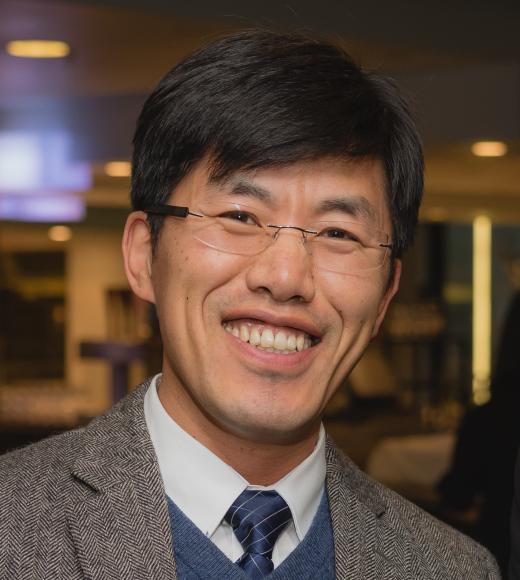
Jinyi Qi a professor at the Department of Biomedical Engineering in the University of California, Davis. He was named Fellow of the Institute of Electrical and Electronics Engineers in 2014 for contributions to statistical image reconstruction for emission-computed tomography.
Research Interests
Dr. Qi aims to develop advanced image formation and processing tools to push the boundary of molecular imaging using positron emission tomography (PET)/computed tomography (CT). His lab combines in silico modeling of tracer kinetics, imaging system response and human observation to create new image reconstruction algorithms and design future imaging systems that provide higher sensitivity and specificity for lesion detection and staging. His work has specific applications in fighting cancer and Alzheimer’s disease.
Recent Publications
Biography
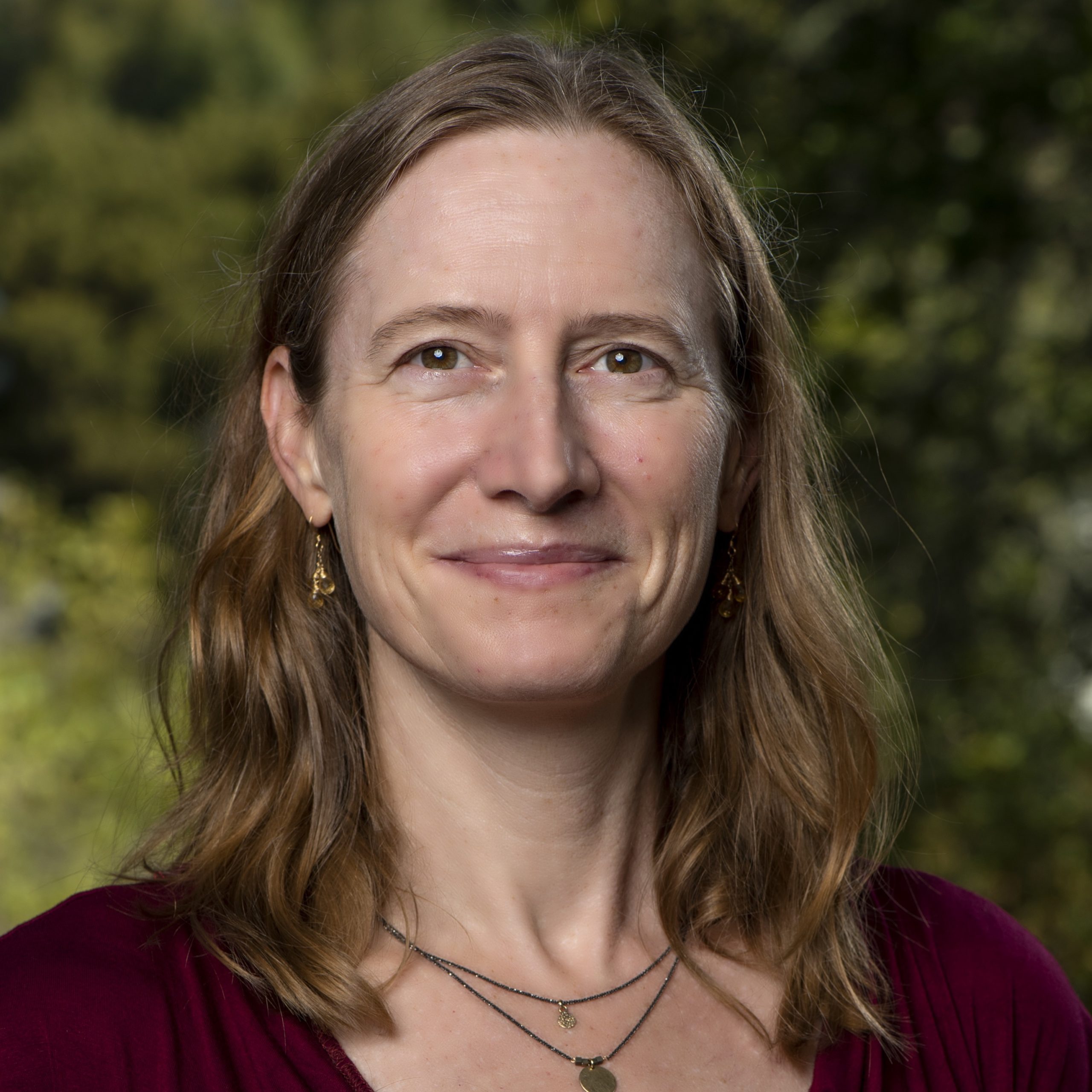
Suzanne Baker got her undergraduate degree in Biomedical Engineering from Tulane University and her PhD in Vision Science at University of California, Berkeley combining information from dipole source localization using EEG and fMRI. The focus of her postdoc was on distortion correction in echo planar imaging (fMRI).
After her postdoc she was hired at Lawrence Berkeley National Laboratory (LBNL) to work for Bill Jagust where her primary responsibility was accurate PET quantification. At LBNL, she got the opportunity to learn about PET scanners and imaging from Ron Huesman and Bill Moses. In addition to applying and acquiring knowledge of image processing to PET, she also enjoyed dabbling in the world of instrumentation and was tasked with keeping the old Siemens (CTI) HR running. She designed all aspects of PET data analysis in the Jagust lab, including detecting/fixing PET/CT overlay, DVR/SUVR/SRTM quantification, and partial volume correction.
Suzanne is experienced in PET analysis for multi-center studies. She has served as the PET core (quality assurance and PET data analysis) for multisite studies (NGF, NIFD, 4RTNI), and works with Bob Koeppe on PET quality assurance for SCAN.
Currently Suzanne’s focus is on minimizing noise in cross-sectional and longitudinal tau imaging. She and Tharick Pascoal are the PIs of an R01 to acquire head-to-head longitudinal tau PET data using MK6240 and Flortaucipir in over 600 participants at 8 different imaging sites with the purpose of comparing and harmonizing longitudinal change measured by these tau PET tracers.
Research Interests
My primary interest is the optimization quantification of PET imaging signal. I work in the field of aging and dementia and focus on:
– pharmacokinetic modeling
– partial volume correction
– analysis of multi-site data
– tracer comparison
– optimization of longitudinal measurements
– reference region analysis
Recent Publications
Related News
Biosciences FY26 LDRD Projects
The Laboratory Directed Research and Development program at Berkeley Lab produces cutting-edge research for the DOE and the nation. Read about the Biosciences Area–led projects and multi-Area collaborations with Biosciences co-investigators receiving funding this cycle.
Delayed Hormone Replacement Linked to Tau Accumulation
A recent study suggests that delayed initiation of menopausal hormone therapy (HT) is associated with poorer Alzheimer’s Disease (AD) related outcomes. The team found greater accumulation of tau—a biomarker for AD—in the brains of women over the age of 70 who took HT more than a decade prior.
Biosciences FY25 LDRD Projects
The projects of 23 Biosciences Area scientists and engineers received funding through the FY25 Laboratory Directed Research and Development (LDRD) program.

Research Interests
I focus on serial crystallography computational methods development by researching new algorithms and methods for data reduction at high-energy XFEL sources and synchrotrons. I’m interested in all aspects of the process, from modeling the physics of photon diffraction to file formats and metadata standards to using supercomputers to process huge amounts of data in real time to data visualization.
I am a member of the data reduction team of the Computational Crystallography initiative (cci.lbl.gov), focused on analysis of diffraction data from advanced light sources, including X-ray free electron lasers (XFELs).
I am also researching as part of a large collaboration with the University of Connecticut and MIT the crystal engineering of hybrid coordination polymers towards achieving rational control over the optoelectronic properties of low-dimensional nanostructures. We are using machine learning principles to add advanced spatial and symmetry aware neural network training methods to small-molecule chemical crystallography and material science data processing. Press release.
Recent Publications
Related News
Ultrabright, Ultrashort X-ray Bursts Capture Enzymes in Action
Frame-by-frame ‘molecular movies’ reveal previously invisible intermediates, paving the way for potential new cancer treatments and antibiotics.
Mapping Photosynthesis for a Brighter Future
In this Q&A, MBIB researchers Jan Kern and Asmit Bhowmick delve into the discoveries from their recent structural biology studies of the photosynthetic apparatus in plants and bacteria.
Biosciences FY26 LDRD Projects
The Laboratory Directed Research and Development program at Berkeley Lab produces cutting-edge research for the DOE and the nation. Read about the Biosciences Area–led projects and multi-Area collaborations with Biosciences co-investigators receiving funding this cycle.
Research Interests
Computational biophysics and bio-imaging, inverse problems and projection methods, algorithm development for X-ray diffraction and imaging data.
Recent Publications
Related News
Biosciences FY26 LDRD Projects
The Laboratory Directed Research and Development program at Berkeley Lab produces cutting-edge research for the DOE and the nation. Read about the Biosciences Area–led projects and multi-Area collaborations with Biosciences co-investigators receiving funding this cycle.
Congratulations to Biosciences Area Director’s Award Recipients
Several Biosciences Area personnel are among the 2023 Berkeley Lab Director’s Awards honorees. Awardees are recognized for their outstanding contributions to Lab activities.
Biosciences Area FY23 LDRD Projects
22 Biosciences Area scientists and engineers were awarded funding for their projects through the FY23 Laboratory Directed Research and Development (LDRD) program.
Biography
Henry VanBrocklin, PhD, is a Professor in Residence, Director of the Radiopharmaceutical Research Program in the Center for Molecular and Functional Imaging (CMFI) at the University of California, San Francisco China Basin, and he is a Joint Faculty Scientist at the Lawrence Berkeley National Laboratory. Dr. VanBrocklin obtained his PhD in Radiopharmaceutical Chemistry from Washington University, St. Louis in 1990, and he completed a two-year postdoctoral program at the University of Illinois, Urbana in 1992. He maintains an active radiotracer research program in addition to providing tracers for collaborative basic science and translational clinical research. His research interests include short-lived radioisotope production to the creation of fluorine-18 and carbon-11 labeling chemistry strategies for new radiotracer preparations and applications.
Recent Publications
Research Interests
Recent Publications
Related News
Biosciences Staff Honored with Director’s Awards
Several Biosciences Area personnel have been named as recipients of 2016 Berkeley Lab Director's Awards. Yan Liang (Biological Systems & Engineering), Eva Nogales, and William Jagust (Molecular Biophysics & Integrated Bioimaging, MBIB) were honored with individual awards in Early Career, Scientific Achievement, and Societal Impact, respectively. Jill Fuss and Steven Yannone (MBIB) were the recipients of a team award in Technology Transfer for the launch of their company CinderBio. Jim Bristow (Biosciences Area Office, Trent Northen (Environmental Genomics & Systems Biology & Joint Genome Institute, JGI), and Susannah Tringe (JGI), along with Eoin Brodie and Peter Nico of the Earth and Environmental Sciences Area, were named in a team award in Service.


