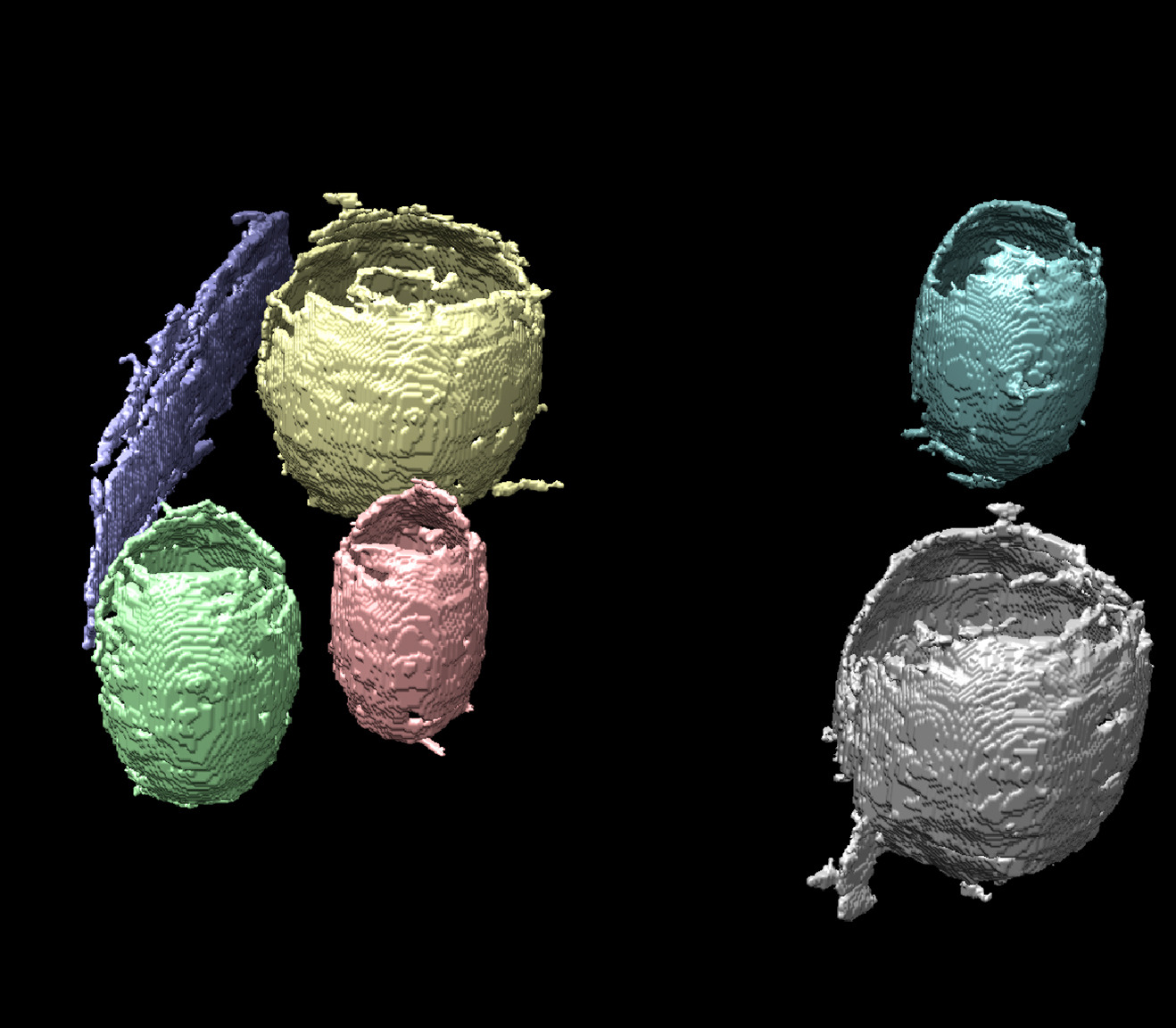
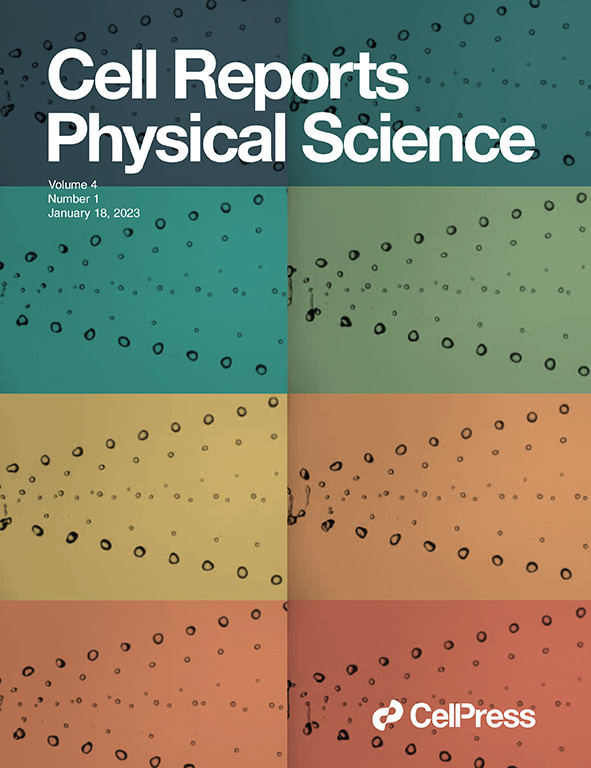
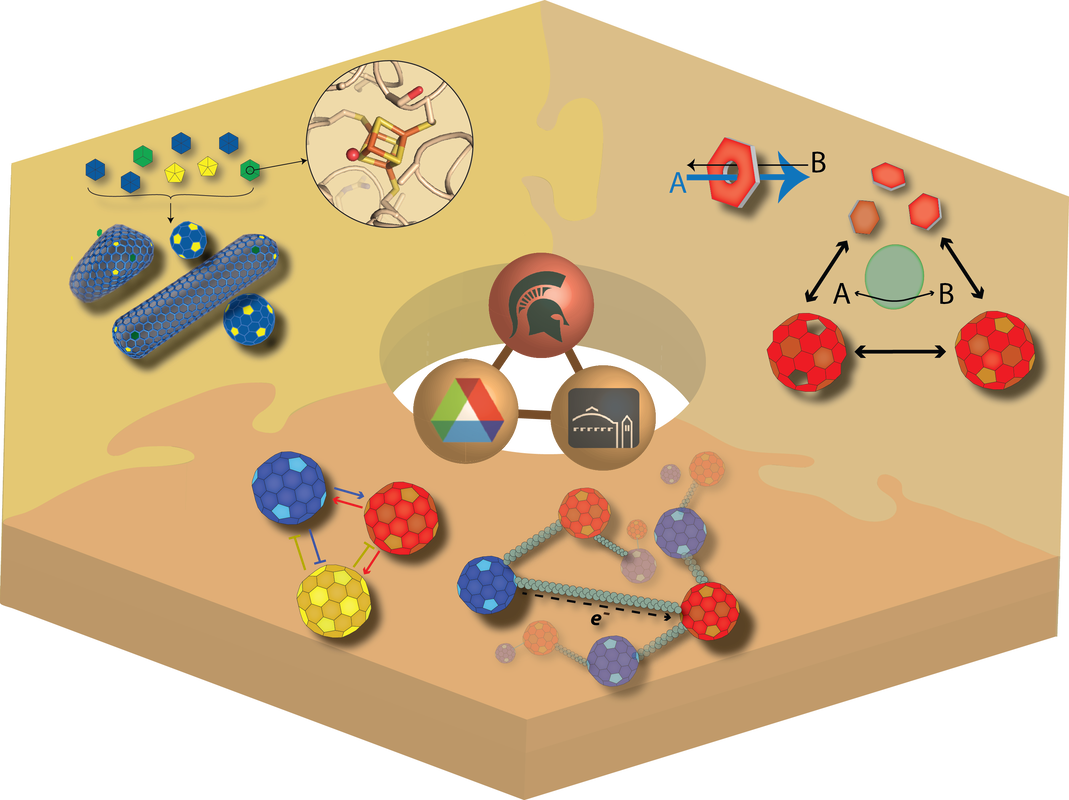
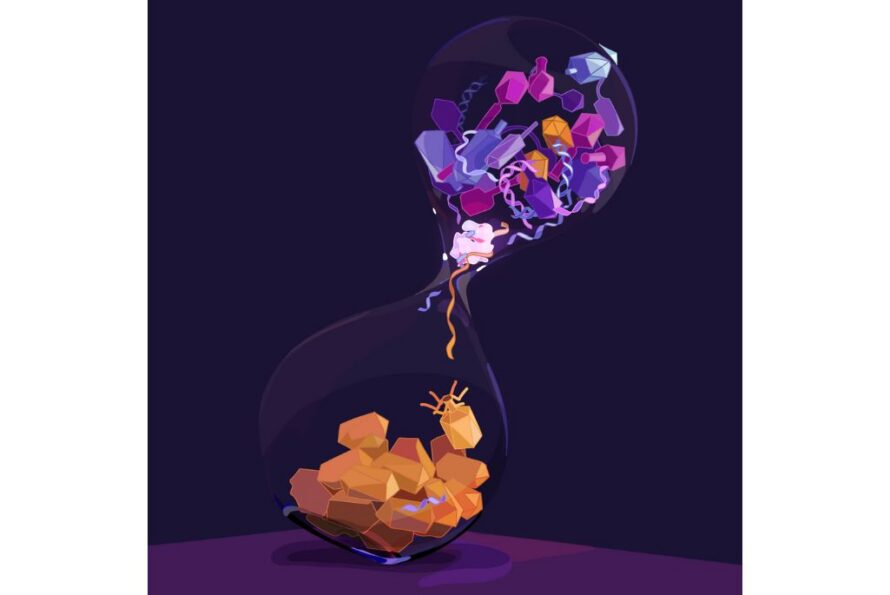
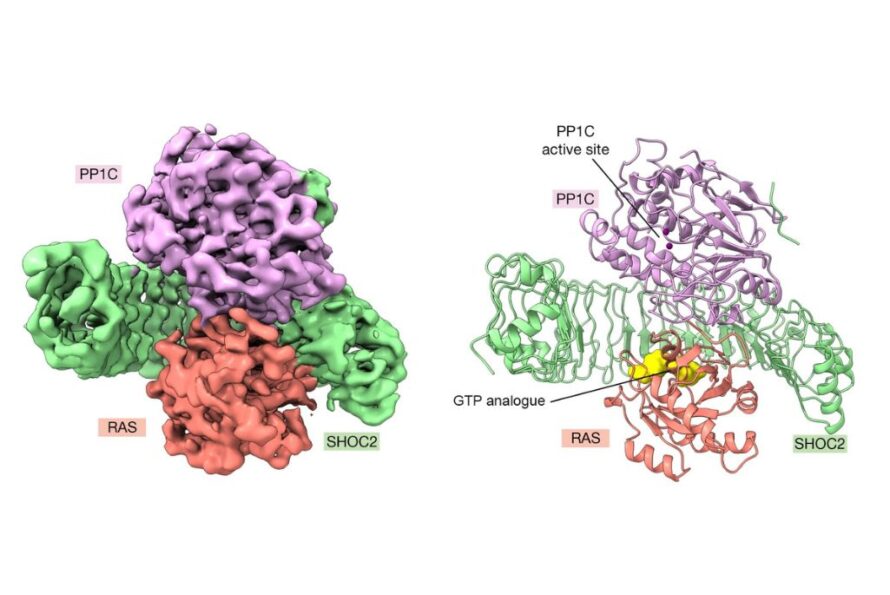
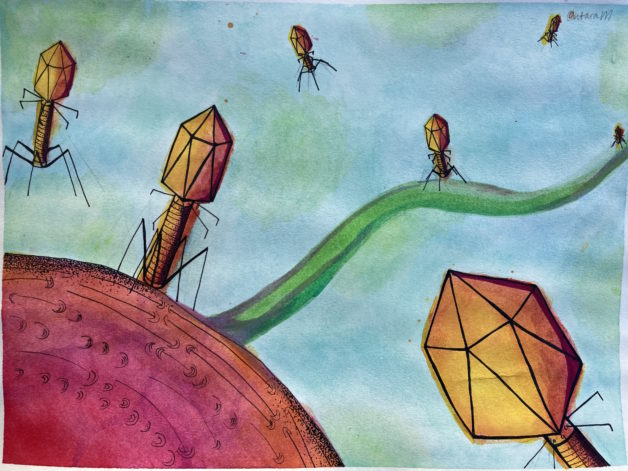
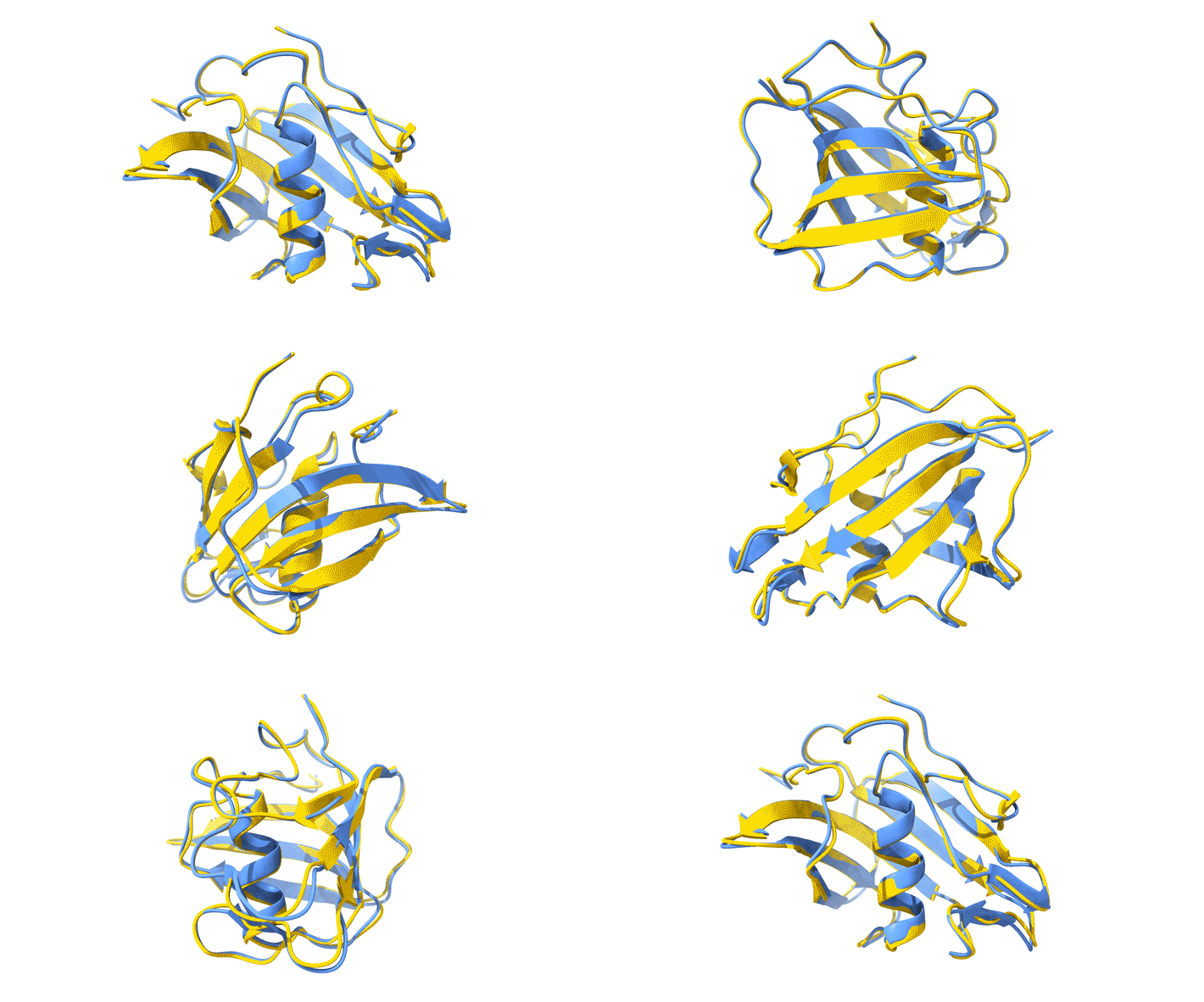
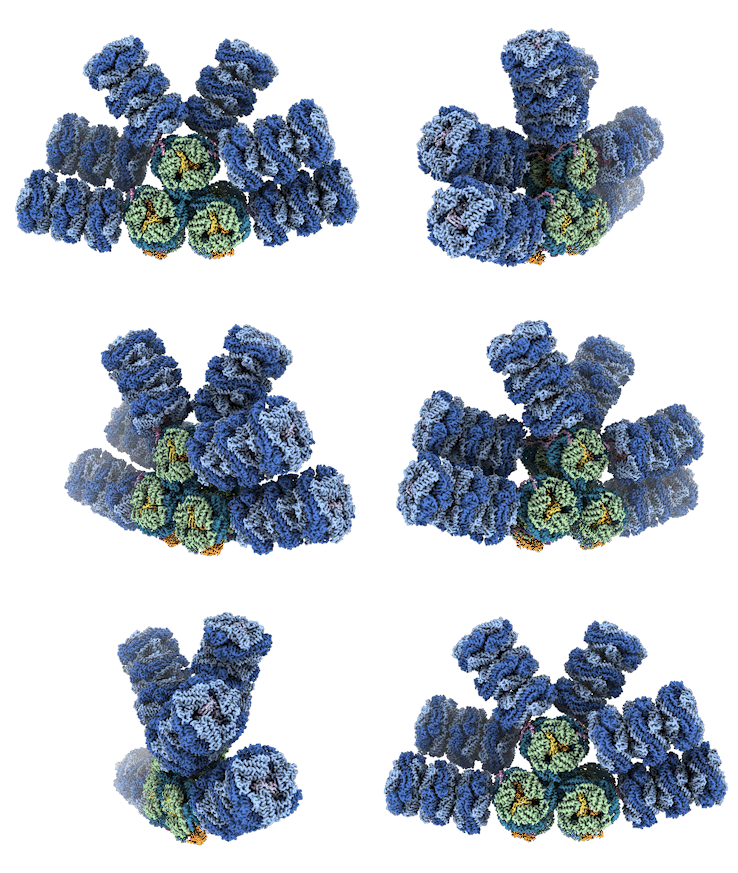
3D rendering of six regions obtained via the machine learning pipeline developed by Berkeley Lab scientists to improve cryo-ET image data analysis. Each region is labeled by a unique color. Study featured on the cover of the January 18, 2023 issue of Cell Reports Physical Science. (Courtesy of Cell Press) LBNL logo CRISPR-Cas13 creates an evolutionary bottleneck by targeting the RNA of diverse phages, allowing for edited phages (orange) to be specifically enriched. (Credit: Davian Ho) Logo with abstract design and text reading "Director's Awards" A complex of three proteins—SHOC2, PP1C, and RAS—plays a key role in signaling cells to replicate and is thus a potential target for anticancer drug development. Left: Cryo-electron microscopy (cryoEM) density map of the complex. Right: Ribbon structure showing the active site and a bound molecule (yellow) necessary for complex formation. An artistic rendering of phages. (Credit: Antara Mutalik) This image depicts ten different structures of rubisco assemblies for the purpose of comparing the differences.

Was this page useful?

Send
like not like