
James Garbe
Retiree Affiliate
formerly research scientist
Recent Publications
Related News
Congratulations to Biosciences Area Director’s Award Recipients
Numerous Biosciences Area personnel are among the 2021 Berkeley Lab Director’s Awards honorees. This annual program recognizes outstanding contributions by employees to all facets of Lab activities. A complete list of winners can be found here. The 10th annual Director’s Awards ceremony will take place on November 18 at noon.
Normal is Good: Breast Cells Produced in Novel Media Resemble Those In Vivo
When studying human cells in a laboratory, it is important that the media, or the broth that bathes the cells, contains all of the nutrients necessary to support cells through their normal growth and division phases even though they are outside of the body. Bioscientists at Berkeley Lab have a long history of studying breast cancer, and Martha Stampfer, senior scientist in the Biological Systems & Engineering (BSE) Division, has spent decades developing media now widely used by the community. Today, PLOS ONE published a study describing a comprehensive analysis of three kinds of media used to grow human mammary epithelial cells (HMEC).
Recent Publications
Related News
Two Scientists Named AAAS Fellows
Two scientists in the Biosciences Area, Abby Dernburg and Blake Simmons, have been elected into the 2025 class of the American Association for the Advancement of Science (AAAS).
Abby Dernburg Elected Into National Academy of Sciences
Abby Dernburg, a senior faculty scientist in the Biological Systems and Engineering (BSE) Division, has been elected into the National Academy of Sciences (NAS) in recognition of her distinguished and continuing achievements in meiosis research.
Dernburg and Nogales Named Fellows of the American Society for Cell Biology
Biosciences’ Abby Dernburg and Eva Nogales--both of whom are also UC Berkeley professors and HHMI Investigators--have been selected as 2017 Fellows of the American Society for Cell Biology (ASCB). Election as a Fellow is an honor bestowed upon ASCB members by their peers. The award is a lifetime recognition of meritorious efforts to advance cell biology and/or its applications, work in service to the Society, and ongoing loyalty to ASCB.

Research Interests
My research interests lie in the use of metabolomics analyses to characterize engineered biosynthetic and metabolic pathways to understand primary and secondary cellular metabolism and their regulation, in vivo. This is directed towards addressing key environmental challenges and engineering robust microbial platforms for producing valuable renewable bioproducts.
Recent Publications
Related News
Biomanufacturing Increases Available Supply of Anti-cancer Drug
Thanks to a leap forward in synthetic biology, the plant-derived chemotherapy vinblastine has a new source.
Finding the Missing Step of an Important Molecular Process
Lysine is an important amino acid that must be supplied in our diets, as our bodies can’t produce lysine on their own. Most cereal grains have low levels of lysine, and scientists have worked to breed crops with higher lysine levels. However, the biochemical processes that break down lysine in plants weren’t fully understood. New Joint BioEnergy Institute (JBEI) research, published in Nature Communications, reveals this last missing step of lysine catabolism.
Building: 90, Room 2012
Mail Stop: R2002
Phone: (510) 486-4507
cdscown@lbl.gov
http://www.cscown.com
Links
Divisions
Energy Analysis and Environmental Impacts
Secondary Affiliation:
Biological Systems and Engineering
- Process Engineering & Analytics
Research Interests
Technoeconomic analysis, life-cycle assessment, bioenergy scenario modeling, energy-water nexus, uncertainty analysis, infrastructure systems modeling, economic input-output modeling, transportation fleet modeling, comparative analysis of energy carriers/energy storage technologies
Recent Publications
Related News
Turning Agricultural Trash to Treasure
New funding will help Berkeley Lab and partners improve how the diverse agricultural waste in California’s Northern San Joaquin Valley can be used to make sustainable bioproducts and biofuels.
Taking Flight with Biofuels and Carbon Crops
A recent study by Joint BioEnergy Institute (JBEI) researchers reveals which crop-based feedstocks offer the greatest potential for a plentiful, cost-competitive, renewable alternative to petroleum-based jet fuel, while also maximizing atmospheric carbon removal.
Bacteria Can Make Infinitely Recyclable Plastic with Renewable Materials
A collaboration among experts at the Molecular Foundry, the Joint BioEnergy Institute (JBEI), and the Advanced Light Source has shown that the starting ingredients in an infinitely recyclable plastic known as poly(diketoenamine), or PDK, can be successfully made by microbes. The new approach shows that renewable, recyclable plastics are not only possible, but also outperform those from petrochemicals.
Building: 978, Room 4462-L
Mail Stop: 978
Phone: (408) 623-4867
syuzawa@lbl.gov
Links
Research Interests
My research has focused on understanding mechanistic and structural features of modular polyketide synthases and exploiting that knowledge for producing a variety of high-value chemicals in microbes from renewable carbon sources. 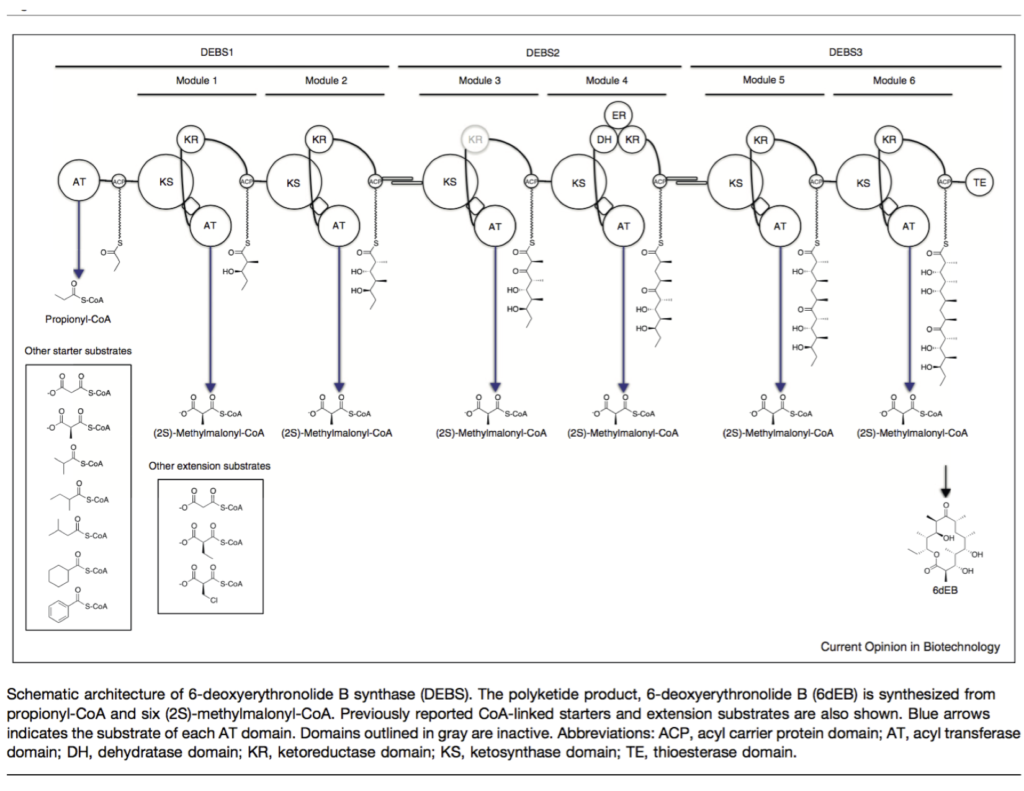
Related News
Scientists Develop Higher-performance Fuels, Biofuels and Bioproducts
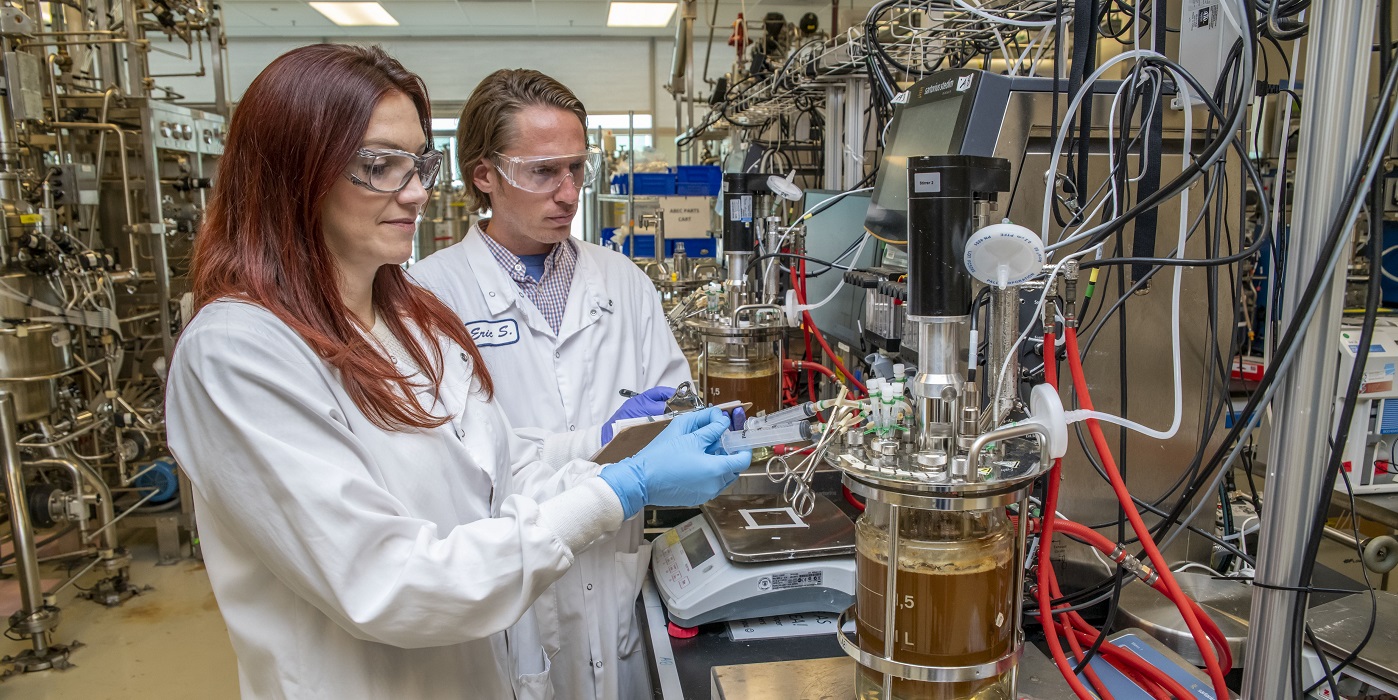 Researchers at the Joint BioEnergy Institute (JBEI) and the Advanced Biofuels & Bioproducts Process Development Unit (ABPDU), part of the Biological Systems and Engineering (BSE) Division, have developed a new polyketide synthase-based platform and prototyped efficient production of potential biofuels, gasoline additives, and commodity chemicals.
Building: 91 (IGB)
Phone: (510) 486-5327
NMouncey@lbl.gov
https://jgi.doe.gov/who-we-are/nigel-mouncey
Divisions
Secondary Affiliation:
Environmental Genomics and Systems Biology
- Molecular EcoSystems Biology
Biography
Nigel Mouncey joined us on March 15, 2017 as the Director of the DOE Joint Genome Institute. Hailing from England, Mouncey earned his Bachelor of Science degree in microbiology with honors from the University of Glasgow and received his Doctor of Philosophy in biochemistry at the University of Sussex. He completed post-doctoral research at Harvard Medical School and the University of Texas Medical School in Houston. Mouncey spent 10 years at Roche Vitamins in New Jersey and DSM Nutritional Products in Switzerland before joining Dow AgroSciences in Indianapolis, Indiana. He has a demonstrated strong track record in microbiology and management, in both the academic and industry sectors.
Recent Publications
Related News
JGI’s New Strategic Plan Couples AI and Genomics to Accelerate Biological Discovery
As AI and advanced computing change what's possible in biology, Director Nigel Mouncey says the JGI’s 2026 strategic plan describes a strong roadmap for evolving while staying true to the well-established user facility model.
Advancing the Frontiers of Genetic Science
As a Department of Energy user facility, the Joint Genome Institute offers scientists access to advanced genomic capabilities, large-scale data and professional expertise. They help us understand biology today and develop breakthroughs for tomorrow.
New Strategic Plan: JGI’s Next 5 Years
The DOE Joint Genome Institute (JGI) has released its newest 5-Year Strategic Plan: Innovating Genomics to Serve the Changing Planet. Aside from aligning the DOE Office of Science user facility with broader national efforts to promote and stimulate a bioeconomy, it lays out how users and the global research community will bridge fundamental knowledge gaps to advance biotechnology and biomanufacturing.

Building: 70A, Room 3317F
Mail Stop: MS-70A3317F
Phone: (510) 486-4091
Fax: (510) 486-7152
rchakraborty@lbl.gov
https://profiles.lbl.gov/20463-romy-chakraborty
Divisions
Climate & Ecosystems
Secondary Affiliation:
Environmental Genomics and Systems Biology
- Molecular EcoSystems Biology
Biography
As an environmental microbiologist, Chakraborty has pioneered identification of unique microbes mediating critical carbon and nitrogen metabolisms in diverse ecosystems. She is involved in extensive outreach and mentorship and her efforts have led to very positive impacts in the community, at the Laboratory, and on the career trajectories of a wide range of early career scientists.
Recent Publications
Related News
Managing Microbes for More Resilient Plants
Scientists curated a microbial community that helped a species of grass better recover from drought.
EcoFABs Could Help Fuel AI in Agriculture
A first-of-its-kind global study showed that EcoFABs can deliver consistent results across labs on three continents, supported by open protocols, tools, and datasets. The reliable, large-scale data EcoFABs generate are ideal for training AI, which could help accelerate discoveries in crop development, soil health, and agriculture.
Biosciences FY26 LDRD Projects
The Laboratory Directed Research and Development program at Berkeley Lab produces cutting-edge research for the DOE and the nation. Read about the Biosciences Area–led projects and multi-Area collaborations with Biosciences co-investigators receiving funding this cycle.

Building: 977, Room 107
Mail Stop: 977
Phone: (510) 495-2795
Fax: (510) 486-7152
glandersen@lbl.gov
Links
Divisions
Environmental Genomics and Systems Biology
- Molecular EcoSystems Biology
Secondary Affiliation:
Biography
I received my undergraduate training at Northwestern University where I majored in Biology. While at Northwestern, I worked for Dr. James A. Lippincott on Agrobacterium tumefaciens Ti plasmid transfer and integration. It was here that I first developed an interest in molecular biology and plant pathology. I then went to the University of California at Berkeley were I eventually ended up working the laboratory of Dr. Steven Lindow as a staff research associate for almost eight years. I was rapidly educated in the workings of the news media and public perceptions of scientific research with the lab’s release of Ice Minus Pseudomonas syringae into the environment. I went to graduate school in the Department of Plant Pathology at UC Berkeley with Dr. Lindow as my advisor and Dr. Andy O. Jackson as my mentor in molecular biology. My interest was in the bacterium’s response to stress in the environment and received my Ph.D. under Steve Lindow in the characterization of epiphytic fitness mutants of P. syringae subjected to UV and desiccation stresses. The mid-90s was not the best time for agricultural research funding, so for my post-doc I changed fields, still keeping my interest in bacterial interactions in the environment. I joined Dr. Ken Wilson’s lab in the Infectious Diseases Division of Duke University Medical Center where I studied culture-resistant human pathogens and the epidemiology of the anthrax pathogen, Bacillus anthracis. While at Duke University I was fortunate enough to be the first to discover sequence-based differences for the differentiation of strains of B. anthracis. The variable number tandem repeats (VNTR) that I discovered became the basis for a strain identification system for B. anthracis that is still in use today. I joined Lawrence Livermore National Laboratory as a Principle Investigator in the Biology and Biotechnology Research Program. While at LLNL, I set up a research program in bacterial diagnostics and environmental monitoring of pathogens. I joined Lawrence Berkeley National Laboratory in 2003 as a Scientist in the Earth Sciences Division. I have set up a laboratory to study bacterial responses to selected environments. I have been very excited to be at a place where I am exposed to the latest technological breakthroughs and to be right next door to the UC Berkeley campus where I am able to interact with the leaders in the field of microbiology. I am the former Head of the Ecology Department at LBNL.
Research interests from EESA’s webpage:
My research focus is in the area of microbial ecology and includes the examination of phylogenetic diversity in natural environments. My laboratory uses molecular approaches to study the dynamics of microbial community structure under changing environmental conditions. This includes the development of new techniques to dissect the microbial diversity of complex ecosystems. The long-term goal of this research is to integrate different fields of biology (i.e., genomics, ecology, molecular biology, proteomics and bioinformatics) to provide insight into the interactions of environmental microorganisms under stressful conditions. We hope to harness the existing capabilities of beneficial microbes to improve water quality, reduce contamination and limit the amount of carbon released into the atmosphere. My current research focuses on the remediation of oil spills, limiting sulfate reduction in oil reservoirs, tracking sources of fecal pollution in marine and freshwater systems and using thermophilic composting to reduce the impact of wastes on watersheds and to improve land use productivity. My laboratory has developed Greengenes, a 16S rRNA gene sequence repository and online toolset, for aligning/annotating novel sequences, interpreting microarray results and developing phylogenetically specific probes. We have been part of the Data Analysis and Coordination Center for the Human Microbiome Project and have examined the tremendous diversity of human-associated microbes. We have developed numerous microarray systems, including the third-generation (G3) PhyloChip, for the measurement of microbial diversity and the identification of bacterial communities by 16S rRNA gene sequences. We have also developed additional microarray systems, including microarrays for whole-genome expression profiling in response to various environmental stimuli.
A complete listing of current research projects can be found on The Andersen Lab website or on UC Berkeley’s Gary Andersen Page
Research Interests
I am interested in using molecular approaches to study the dynamics of microbial community structure in the environment. This includes the development of new techniques to dissect the microbial diversity of complex ecosystems. The long-term goal of this research is to integrate different fields of biology (i.e., genomics, ecology, molecular biology, proteomics and bioinformatics) to provide insight into the interactions of environmental microorganisms under stressful conditions. My current research focuses on the microbial ecology of airborne and aquatic bacteria with an emphasis on the natural distribution of pathogens in the environment. I have developed numerous microarray systems for the measurement of microbial diversity and the identification of bacterial communities by 16S and other gene sequences. I have also used microarrays for whole genome expression of genes in response to environmental stimuli.
Recent Publications
Related News
Congratulations to Biosciences Area Director’s Award Recipients
Numerous Biosciences Area personnel are among the 2021 Berkeley Lab Director’s Awards honorees. This annual program recognizes outstanding contributions by employees to all facets of Lab activities. A complete list of winners can be found here. The 10th annual Director’s Awards ceremony will take place on November 18 at noon.
From the Molecular to the Mesoscale: The EcoPOD Provides A New Way to Link Plants, Soil, and Microbes
On May 25, Berkeley Lab and Biosciences Area leadership officially welcomed the EcoPOD to its home at Potter Street in West Berkeley. The Lab's Deputy Director for Research Horst Simon and Associate Laboratory Director for Biosciences Mary Maxon opened the doors of the EcoPOD after Maxon cut the ceremonial ribbon.
PhyloChip Provides Clarity Amid Hawaiian Water Contamination Concerns
To better understand the cause of high counts of potentially pathogenic fecal indicator bacteria (FIB) in the watersheds of the Mahaulepu Valley and Waikomo Stream in southeast Kauai, the Hawaii Department of Health (DOH) commissioned a study by Berkeley Lab microbial ecologists Gary Andersen and Eric Dubinsky. The duo is frequently invited to lead microbial water assessment projects thanks to their expertise and the PhyloChip, a credit card-sized microbial detection technology invented by Andersen and others at Berkeley Lab.

Building: 33, Room 349
Mail Stop: 33R0345
Phone: (510) 221-7384
Fax: (510) 486-5909
PAfonine@lbl.gov
Links
Research Interests
1) New algorithms and methods development for crystallographic structure determination of small- and macro(bio)-molecules.
2) Software (Phenix) development for automated crystallographic structure solution, analysis and validation using X-ray, neutron and cryo-EM data.
3) Three-dimensional structure determination of macro-molecules.
Recent Publications
Related News
Cracking the Code: Using AI to Solve Difficult-to-map Proteins
Leveraging artificial intelligence and quantum calculations, scientists developed a new tool that yielded higher-quality structural information and solved notoriously elusive proteins.
Congratulations to Biosciences Area Director’s Award Recipients
Numerous Biosciences Area personnel are among the 2021 Berkeley Lab Director’s Awards honorees. This annual program recognizes outstanding contributions by employees to all facets of Lab activities. A complete list of winners can be found here. The 10th annual Director’s Awards ceremony will take place on November 18 at noon.
Revealing the Shapes of Molecular Machines
Within each cell of the human body, thousands of molecular machines are at work. They transport nutrients and biochemicals into and out of our cells, build other tiny machines, and even move our cells around. To understand how these molecular machines work, scientists create three-dimensional pictures using electron cryomicroscopy (cryo-EM), catching these machines in different shapes that give insight into their function. Now researchers at Berkeley Lab and their international collaborators who write and distribute the Phenix software suite have developed a new set of computational tools for automated structure determination from cryo-EM data.
Divisions
- Genomic Technologies
Secondary Affiliation:
Environmental Genomics and Systems Biology
- Comparative and Functional Genomics
Research Interests
Using sequence-based approaches to understand genome function.
Recent Publications
Related News
Biosciences Area FY16 LDRD Projects
The projects of eleven Biosciences Area scientists and engineers received funding through the FY2016 Laboratory Directed Research and Development (LDRD) program. These projects cover a broad range of topics, including energy science technology applications, novel computing technologies, and mechanistic understanding of multi-scale interactions among molecules, microbes, plants, metazoans, the abiotic environment, and their feedbacks. Together, these efforts account for nearly 14% of the $25.3 million allocated. Lab-wide, 84 proposals were selected from a field of 179.

Building: 33, Room 349
Mail Stop: 33R0345
Phone: (510) 486-5709
Fax: (510) 486-5909
BKPoon@lbl.gov
https://phenix-online.org
https://cci.lbl.gov
Links
Programs & Initiatives
Recent Publications
Related News
Cracking the Code: Using AI to Solve Difficult-to-map Proteins
Leveraging artificial intelligence and quantum calculations, scientists developed a new tool that yielded higher-quality structural information and solved notoriously elusive proteins.
Congratulations to Biosciences Area Director’s Award Recipients
Numerous Biosciences Area personnel are among the 2021 Berkeley Lab Director’s Awards honorees. This annual program recognizes outstanding contributions by employees to all facets of Lab activities. A complete list of winners can be found here. The 10th annual Director’s Awards ceremony will take place on November 18 at noon.
Building: Donner Laboratory, Room 351A
Mail Stop: DONNER
Phone: (510) 708-2564
SHKim@lbl.gov
https://chemistry.berkeley.edu/faculty/chem/kim
Links
Divisions
Molecular Biophysics and Integrated Bioimaging
- Structural Biology
Secondary Affiliation:
Environmental Genomics and Systems Biology
- Biosystems Data Science
Research Interests
A. Construction of whole genome phylogeny of living organisms, “Tree of Life”
The first task for this project is to develop one or more methods for comparing whole genome sequences of two organisms, not just a set of highly conserved gene or protein sequences, as currently practiced in Multiple Sequence Alignment (MSA) method. Our starting point was treating each whole genome sequence as a book consisting of a single string of alphabets without spaces between words for each chromosome. My group has developed the “Feature Frequency Profile (FFP)” method, which is a variation of “Word Frequency Profile” method used to compare two books describe in the field of Natural Language Analysis. Using the FFP method we were able to construct phylogenic trees of three domains of Life at an intermediate resolution, and two of the most diverse and large groups of Life, Prokaryotes (Archaea and Bacteria combined), and Fungi, the largest kingdom of Eukarya, at a high resolution. Compared to those trees based on MSA methods, our results revealed high similarities in grouping (clading) at high phylogenic levels, but substantial differences in evolutionary branching order of the clades at deeper evolutionary levels. Our next projects are to construct the phylogenic trees of other large “phylogenic” groups such as protists, Eukaryotic algae, insects, plants and others, and ultimately “Tree of Life” for all living organisms for which whole genome sequences are available.
B. Whole genome variation of human species vs. disease susceptibility
Most regions of genomes of normal human cells have been found to have the same sequences among individuals, but a small fraction, spread throughout the genome, have variations within a population. Of these, the single nucleotide polymorphisms (SNPs) account for the largest number of variations and, have been identified in over 3 million genomic “tag” positions out of 3 billion positions in a whole haploid genome. It has been widely accepted that the analysis of SNPs may be able to allow one to predict the genomic component of the susceptibility of individuals to complex diseases such as cancers, neurological diseases, autoimmune diseases, and other traits. So far, the results from the current analysis methods (e.g. Genome-wide Association Studies method) and interpretation of them have yielded information of limited predictive value of practical utility for making health-related decisions at individual or population level without information of family histories.
Recognizing the complexity and heterogeneity of cancer mechanisms, we have developed, using SNPs, an empirical approach using supervised machine-learning method, a branch of Artificial Intelligence, for predicting the relative genomic susceptibility of an individual to 9 traits consisting of 8 major cancer classes plus a healthy class. The multiclass accuracy of the combined prediction ranges from 33 to 56% depending on cancer classes of testing sets, as compared to 11% for a random prediction among 9 traits. Despite limited SNP data available and absence of rare SNPs in public databases at present, the results suggest that the framework of this approach or its improvement can predict the cancer susceptibility with probability estimates useful for making health-decisions for individuals or for a population. Our next projects are to use similar approaches to predict genomic susceptibility for various neurological diseases and autoimmune diseases.
C. Whole genome variation of non-human species vs. traits
For a longer-term projects we plan to apply similar approaches of machine learning methods as in B above to the genomic variations of various non-human species such as crop and bio-fuel plants, insects, farm animals and other to predict traits such as drought resistance, high growth, insect resistance, disease resistance etc.
Biography
Dr. Kim is a Professor of Graduate Studies in the Department of Chemistry, and a faculty member of Center for Computational Biology, University of California, Berkeley, CA, USA. He is also a Faculty Affiliate, Division of Molecular Biophysics and Integrated Bioimaging, Lawrence Berkeley National Laboratory, Berkeley, CA. His research area has been in Structural Biology of signal communicating proteins, such as Ras, and protein kinases that signal many cellular processes, such as cell differentiation and cancer. More recently his group have been applying machine learning methods for predicting individual’s genomic susceptibility for complex diseases such as cancer using whole genome germline sequence variations. More recently, his group has developed a new computation method to construct a “Whole-genome Tree of Life” that reveals kinship among all living organisms using whole-genome sequence information based on Information Theory. A similar approach is being used to study genomic demography of human ethnic groups. He is a member of the US National Academy of Sciences, a Fellow of the American Academy of Arts and Sciences, and a Fellow of The American Association for the Advancement of Science.
Recent Publications
Related News
Two Bioscientists Among Those Named AAAS Fellows
Two scientists from the Biosciences Area, Sung-Hou Kim and Susannah Tringe, have been named Fellows of the American Association for the Advancement of Science (AAAS). They join fellow Lab scientists Allen Goldsten, faculty scientist in the Energy Technologies Area, and Kathy Yelick, associate laboratory director of Computing Sciences, in receiving the distinction of Fellow this year for “their scientifically or socially distinguished efforts to advance science or its applications.”


