
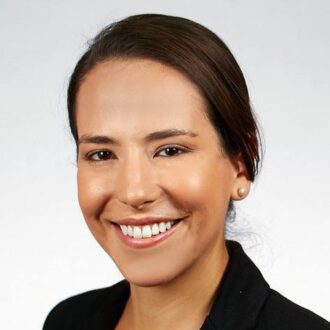
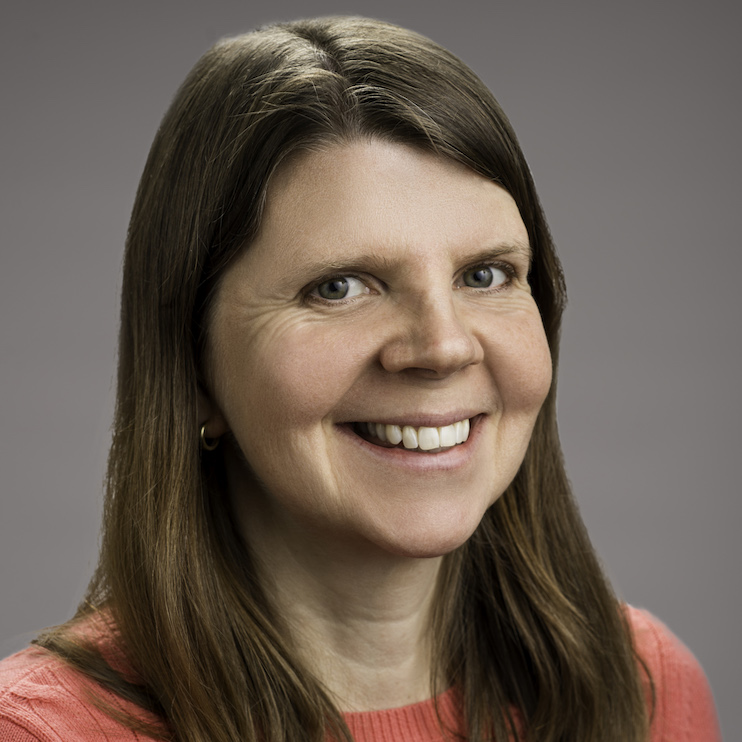
Markita Landry
Biochemist Faculty Scientist
Assistant Professor, UC Berkeley Chemical and Biomolecular Engineering
Biochemist Faculty Scientist, Innovative Genomics Institute
Chan-Zuckerberg Biohub Investigator
Building: Gilman Hall, Room 106
Phone: (919) 349-4877
landry@berkeley.edu
http://landrylab.com/
Links
Biography
Markita Landry is an assistant professor in the department of Chemical and Biomolecular Engineering at the University of California, Berkeley. She received a B.S. in Chemistry, and a B.A. in Physics from the University of North Carolina at Chapel Hill, a Ph.D. in Chemical Physics from the University of Illinois at Urbana-Champaign, and completed a postdoctoral fellowship in Chemical Engineering at the Massachusetts Institute of Technology.
She is a recent recipient of early career awards from the Brain and Behavior Research Foundation, the Burroughs Wellcome Fund, The Parkinson’s Disease Foundation, the DARPA Young Investigator program, the Beckman Young Investigator program, the Howard Hughes Medical Institute, is a Sloan Research Fellow, an FFAR New Innovator, and is a Chan-Zuckerberg Biohub Investigator.
Research Interests
My current research centers on the development of synthetic nanoparticle-polymer conjugates for imaging neuromodulation in the brain, and for the delivery of functional biomolecules and nutrients into living systems. The Landry lab exploits the highly tunable chemical and physical properties of nanomaterials for the creation of bio-mimetic structures, molecular imaging, and gene editing.
Recent Publications
Related News
Landry Awarded 2025 Guggenheim Fellowship
MBIB faculty scientist studying behavior of chemicals between cells in the brain and plants will take her research to Bolivia.
Landry Receives Blavatnik National Award
Markita Landry, a faculty scientist with MBIB, has been named the 2024 Laureate in Chemical Sciences by the Blavatinik Family Foundation and the New York Academy of Sciences.
Congratulations 2021 Chan Zuckerberg Biohub Investigators
Four faculty scientists in the Biosciences Area were included in The Chan Zuckerberg Biohub Investigator Program, awarding $21 million to 21 University of California, Berkeley researchers.

Research Interests
Biomedical imaging instrumentation and physics
Recent Publications
Divisions
- Science Programs
Secondary Affiliation:
Environmental Genomics and Systems Biology
- Comparative and Functional Genomics
Research Interests
My research focuses on secondary metabolism of microbes. I am particularly interested in understanding how the production of secondary metabolites is controlled and what their roles are.
Programs & Initiatives
Recent Publications
Related News
Salt Activates Gene Clusters in Streptomyces
This single environmental trigger highlights efficiency for users requiring multiple omics methods to examine microbial chemical production.
JGI Streamlines Regulon Identification in Bacteria
Using RIViT-seq technology, which combines an in vitro transcription assay with RNA sequencing, JGI researchers were able to identify the target genes of 11 sigma factors in Streptomyces coelicolor. The work was published in Nature Communications.
Building: 977, Room 0254
Mail Stop: 977-225
Phone: (510) 289-7435
NHumphreys@lbl.gov
https://bsbkops.lbl.gov/
Biography
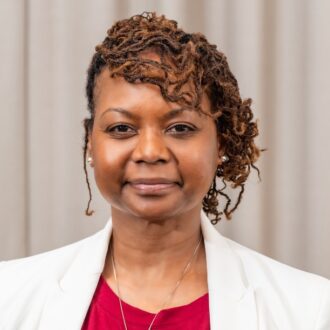
Nikki Humphreys has worked in the University of California (UC) System for over twenty years gathering a wealth of experience and honing her analytical, communication, planning, and project management skills. She has held management positions at UC Berkeley, UC Davis, and UC Agriculture & Natural Resources (UC ANR). Most recently, she has been serving as the Director of Administration of the Department of Bioengineering at the University of California, Berkeley. Humphreys has demonstrated strengths in financial management, strategic planning, and personnel administration, making her well suited for this integral position. She has a strong track record in management, having twice received the Berkeley Staff Assembly Excellence in Management Award.
Related News
Congratulations to Biosciences Area Director’s Award Recipients
Seventeen Biosciences staff members were honored, both individually and as part of a team, in seven different award categories.
Congratulations to Biosciences Area Director’s Award Recipients
Several Biosciences Area personnel are among the 2024 recipients of Berkeley Lab Director’s Achievement Awards. The program recognizes outstanding contributions by employees to all aspects of Lab activities.
Congratulations to Biosciences Area Director’s Award Recipients
Several Biosciences Area personnel are among the 2023 Berkeley Lab Director’s Awards honorees. Awardees are recognized for their outstanding contributions to Lab activities.
Building: 70A, Room 2250
Mail Stop: 70A-3317
Phone: (510) 486-5538
ntas@lbl.gov
https://eesa.lbl.gov/profiles/neslihan-tas/
Links
Divisions
Climate and Ecosystems
Secondary Affiliation:
Environmental Genomics and Systems Biology
- Molecular EcoSystems Biology
Research Interests
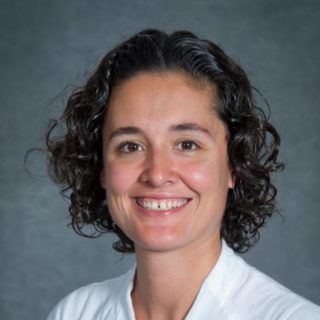
My research focuses on understanding the impact of climate change on soil and aquatic biogeochemical cycles via studying microbial community functions and metabolism. I currently lead the permafrost microbiology component of the multi-institutional NGEE Arctic project of DOE in which we study microbial carbon cycling in climate sensitive regions in the arctic. I am also part of Terrestrial Ecosystem Science at Berkeley Lab team studying the consequences of increasing soil temperatures on soil carbon cycling in-situ manipulation experiments. Lastly, my most recent project aims to define microbial functions and their controls on terrestrial carbon and nutrient turn-over at terrestrial to aquatic interfaces.
Programs & Initiatives
Recent Publications
Related News
Exploring Microbes in Arctic Soils
Neslihan Taş is studying how microbial processes shift as arctic permafrost melts. She's working with the BSISB team to leverage infrared tools to reveal new patterns in biogeochemical cycles.
Congratulations to Biosciences Area Director’s Award Recipients
Numerous Biosciences Area personnel are among the 2021 Berkeley Lab Director’s Awards honorees. This annual program recognizes outstanding contributions by employees to all facets of Lab activities. A complete list of winners can be found here. The 10th annual Director’s Awards ceremony will take place on November 18 at noon.
Impact of Environmental Changes on Microbes in Arctic Soils
As the Arctic continues to warm at about twice the rate of the rest of the world, scientists expect its frozen soils—known as permafrost—to thaw, activating microbes capable of decomposing soil and releasing carbons and other nutrients to the atmosphere and water. Berkeley Lab scientists in the Earth and Environmental Systems Area (EESA), led by microbial ecologist Neslihan Taş, set out to learn more about how Arctic soil microbes can contribute to greenhouse gas emissions under a warming climate. Taş’s research team collaborated with Susannah Tringe, Deputy for User Programs at the Joint Genome Institute (JGI), to conduct their study, funded by the Department of Energy’s Office of Biological and Environmental Research (BER). The results were published in Nature Communications.
Research Interests
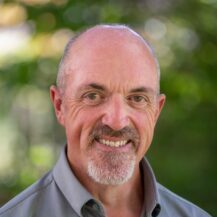
The Coates lab is focus on environmental microbiology, specifically applied microbiology and bioremediation to clean up pollution and research environmentally friendly approaches to technology and oil extraction. We are located in the Department of Plant & Microbial Biology at UC Berkeley, as well as the Energy Biosciences Institute in Berkeley, CA.
Recent Publications
Research Interests
Paul Williams’ expertise is in epidemiologic studies and analysis, including infectious disease. Recent studies have focused on striking a balance to maximize the health benefits of walking or running. Some press releases and science shorts can be seen here:
Excessive Running or Walking May Eliminate Health Gains in Heart Attack Survivors, Finds Berkeley Lab Research (August 12, 2014)
Running May Be Better Than Walking for Breast Cancer Survival (January 28, 2014)
Running, Even in Excess, Doesn’t Lead to More Osteoarthritis and Hip Replacements (February 28, 2013)
Recent Publications
Related News
It’s All Connected: Your Genes, Your Environment, and Your Health
Statistician Paul Williams, a staff scientist in the Molecular Biophysics and Integrated Bioimaging (MBIB) Division, specializes in investigating the instances where genetics and environment are most closely intertwined. His work focuses on a phenomenon called “quantile-dependent expressivity,” which describes the relationship between the genes that predispose people to certain traits that can be amplified by behavior and environmental factors.
The Biology Behind Your Love (or Hatred) of Coffee
New research by Paul Williams, staff scientist in the Molecular Biophysics & Integrated Bioimaging Division, suggests that our intake of coffee is affected by a positive feedback loop between genetics and the environment. This phenomenon, known as “quantile-specific heritability,” is also associated with cholesterol levels and body weight, and is thought to play a role in other human physiological and behavioral traits that defy simple explanation.
Building: 978, Room 4468
Mail Stop: 978R4468
Phone: (510) 908-2327
ageudes@lbl.gov
http://jbei.org
Links
Research Interests
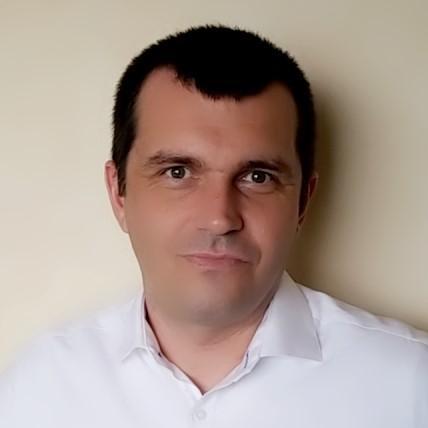
My research focuses on:
- Developing bioenergy crops for sustainable production of fuels and chemicals.
- Establishing novel approaches to modify lignin in plant biomass.
- Designing metabolic pathways for the production of value-added chemicals in plants.
- Identifying bio-engineering approaches to promote soil carbon sequestration.
- Engineering microorganisms for the synthesis of plant-specific metabolites.
Recent Publications
Related News
Harnessing Plants’ Plasticity to Make Key Industrial Chemical
Researchers engineered poplar trees to produce a high-value chemical, demonstrating the plant's ability to serve as a living factory for useful materials.
Uncovering a Hidden Carbon Pathway in Photosynthesis
Biosciences researchers collaborated with Kolby Jardine from the Earth and Environmental Sciences Area to help understand a newly identified carbon pathway that operates in photosynthesis.
Biosciences Area FY23 LDRD Projects
22 Biosciences Area scientists and engineers were awarded funding for their projects through the FY23 Laboratory Directed Research and Development (LDRD) program.
Biography
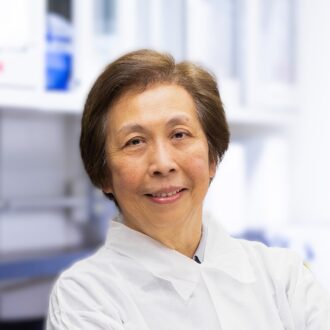
Polly Chang is the Senior Scientific Director of Nonclinical Development in SRI’s Biosciences Division. Chang received her PhD in Biophysics from University of California, Berkeley, and dedicated most of her early career in the area of radiation biology at Lawrence Berkeley National Laboratory, focusing on understanding the impact of highly energetic particle radiation on cells and tissues. This work transitioned to NASA-supported research using in vitro and in vivo models to understand the risks for manned space missions. Chang is Senior Scientific Director of Nonclinical Development in the Biosciences Division at SRI, an independent nonprofit R&D institute in Menlo Park, and remains active in the radiation biology community.
Biography
- Claire Tomlin is a Professor of Electrical Engineering and Computer Sciences at the University of California at Berkeley, where she holds the Charles A. Desoer Chair in Engineering. She held the positions of Assistant, Associate, and Full Professor at Stanford from 1998-2007, and in 2005 joined Berkeley. She received the Erlander Professorship of the Swedish Research Council in 2009, a MacArthur Fellowship in 2006, and the Eckman Award of the American Automatic Control Council in 2003. She works in hybrid systems and control, with applications to air traffic systems, robotics, and biology.
Research Interests
Hybrid Control Systems: These are systems which combine continuous time dynamics with discrete event dynamics. Research involves design, verification using new computational methods for computing reachable sets, and simulation of hybrid systems. We are currently developing the theory and designing models to predict the behavior of complex systems.
This work is supported by NSF, ONR, and AFOSR.
Air Traffic Control Automation: This is joint work with NASA Ames to design models of and control systems for Air Traffic dynamics. This research includes algorithms for automatic resolution of trajectory conflicts between multiple aircraft, as well as novel polynomial time scheduling algorithms.
Algorithms for Decentralized Optimization: In this project, we are designing algorithms with provable convergence properties for decentralized optimization — meaning that several interconnected units act as local decision-makers and optimize local costs, coordinating with each other through constraints. This work is supported by NSF, ONR, and AFOSR.
Human-automation Systems: This research involves analysis of systems for which the control authority is shared between human and automation. We work on the analysis of autopilot systems, driving systems, and robotic systems.
Modeling and Analysis of Biological Cell Networks: In this research project we are building models and analysis tools for helping to understand biological cell networks. Current research includes HER2+ breast cancer, early stage Drosophila development, and planar cell polarity in Drosophila. This is joint work with OHSU, LBNL, UCSF, and Stanford, and is supported by grants from the NCI and NIH.
Unmanned Aerial Vehicle Design and Control: In this project we are building a team of UAVs with the goals of studying formation flying, architectures for distributed control, and methods for reliable control over communication links.
Recent Publications
Related News
Claire Tomlin Elected to American Academy of Arts and Sciences
Claire Tomlin, a biological faculty engineer in the Biological Systems and Engineering (BSE) Division, has been elected to the American Academy of Arts and Sciences. The prestigious 239-year old honorary society recognizes accomplished scholars, scientists, and artists in academia, the humanities, arts, business, and government. Tomlin's research, which is currently conducted primarily at UC Berkeley, where she is a professor of electrical engineering and computer sciences, explores complex systems that have discrete event dynamics as well as continuous time dynamics. Her group studies many topics and problems that can be modeled by hybrid systems as well as more general robotics, such as air traffic control automation, algorithms for decentralized optimization, modeling and analysis of biological cell networks, and unmanned aerial vehicle design and control. The 2019 class of 200-plus new lifetime members announced this week will be inducted at a ceremony in October 2019 in Cambridge, Massachusetts.

Divisions
Molecular Biophysics and Integrated Bioimaging
- Structural Biology
Secondary Affiliation:
Biological Systems and Engineering
- BioEngineering & BioMedical Sciences
Recent Publications
Related News
Thirdhand Smoke Harms the Body More Than We Ever Realized
A new study found that concentrations of toxic chemicals lingering indoors where cigarettes have been smoked can exceed risk guidelines from the State of California. This means that non-smokers can be exposed to health risks by living in contaminated spaces.
Research Interests
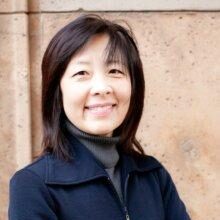
We are interested in understanding how constituents of the remodeled extracellular matrix and tumor stroma contribute resistance to therapy. ECM comprise the main ligands for integrins, which transmit extracellular cues to effect cell fate. We have investigated integrin signaling in pre-clinical models of breast cancer, showing its promise as a therapeutic target alone and with radiation therapy. In addition to the molecular aspects of ECM-induced signaling via integrins, recent developments point to the physical and mechanical aspects of the ECM and malignant stroma in cancer progression, and now, possibly resistance. We are interested in understanding how mechanical features of stroma may enhance resistance through integrin-dependent and independent pathways.


