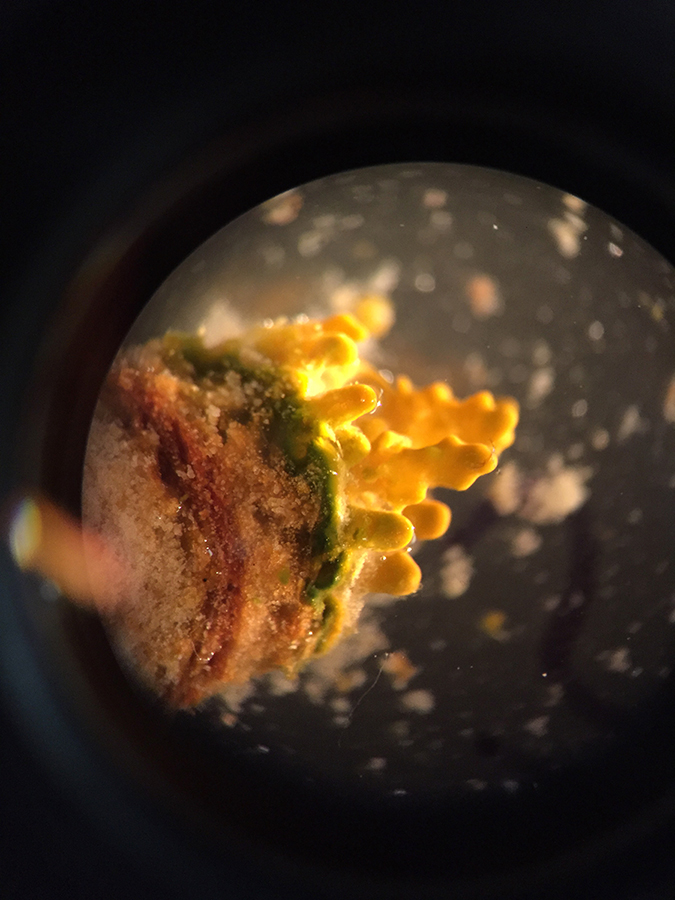
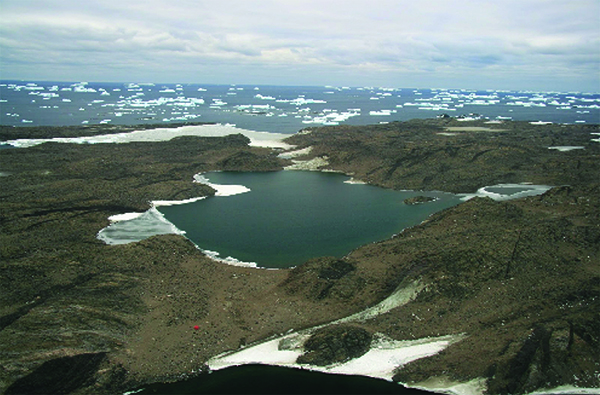
Artistic interpretation of how microbial genome sequences from the GEM catalog can help fill in gaps of knowledge about the microbes that play key roles in the Earth's microbiomes. (Rendered by Zosia Rostomian​, Berkeley Lab) Green millet plants growing at the Danforth Center. (Bruton Stroube/ Donald Danforth Plant Science Center) Microbial mat under the microscope. Visible layers contain different microbial communities and minerals. The team characterized viruses in a subset of the mat layers. (John Spear) Brachypodium distachyon, the model species for temperate cereals and biofuel crop grasses with a growing pan-genome of one hundred genomes, in Spain: Huesca, Ibieca, San Miguel de Foces. (Pilar Catalán) Transmission electron microscope image showing SARS-CoV-2, the virus that causes COVID-19, isolated from a patient in the U.S. (Credit: NIAID) Aerial view of Ace Lake in March, as ice begins to reform on the surface. (Courtesy of Anthony Hull) Gradient of the betaxanthins production in yeast across various different cultures. (Courtesy of Matthew Deaner) Support Vector Machine (SVM)-based prediction of lifestyle based on 6 gene clusters showed a >95 % accuracy in correctly predicting plant pathogens (blue) vs saprobes (green). (From Haridas S et al. Studies in Mycology, 2020)

Was this page useful?

Send
like not like