
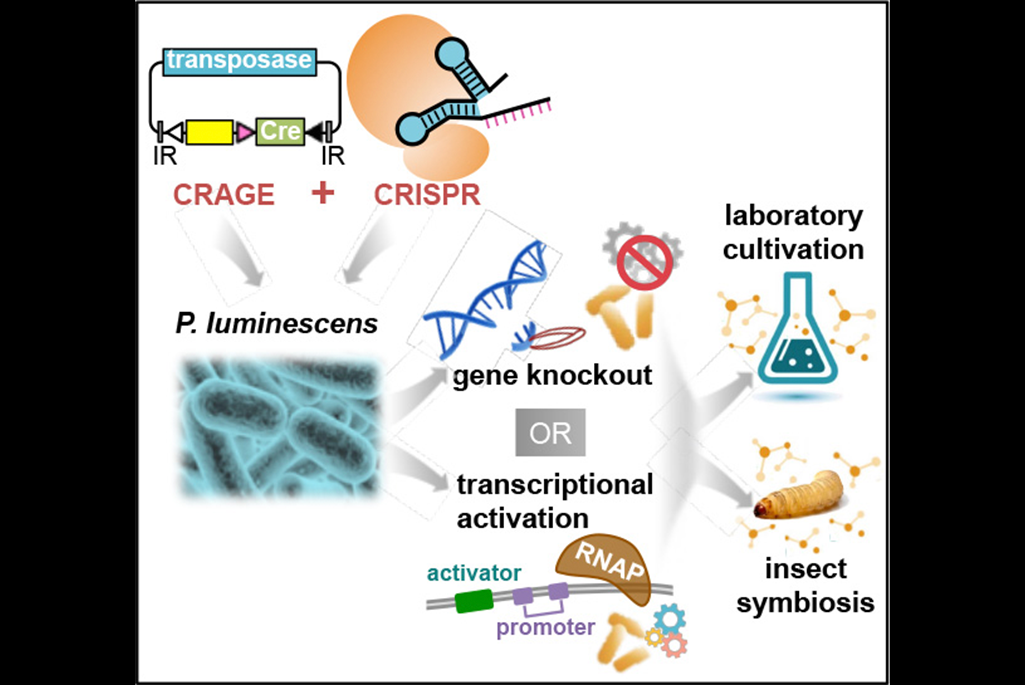
Microbial secondary metabolites, those molecules not essential for growth yet essential for survival, may now be easier to characterize following a Joint Genome Institute (JGI) proof-of-concept study in which researchers paired Clustered Regularly Interspaced Short Palindromic Repeats (CRISPR) with chassis-independent recombinase-assisted genome engineering (CRAGE) technologies. CRAGE (developed by a JGI team led by Yasuo Yoshikuni) offers CRISPR a point of entry into microbes that it previously lacked. Then, by using CRISPR to knock out or activate genes, researchers at the JGI were able to monitor loss- and gain-of-function, with the analytical data showing peaks and valleys in secondary metabolites as genes are edited. The pairing proved to rapidly confirm enhanced production of 22 metabolites from six biosynthetic gene clusters. One of those was a metabolite from a previously uncharacterized biosynthetic gene cluster.
Learn more on the JGI website.


