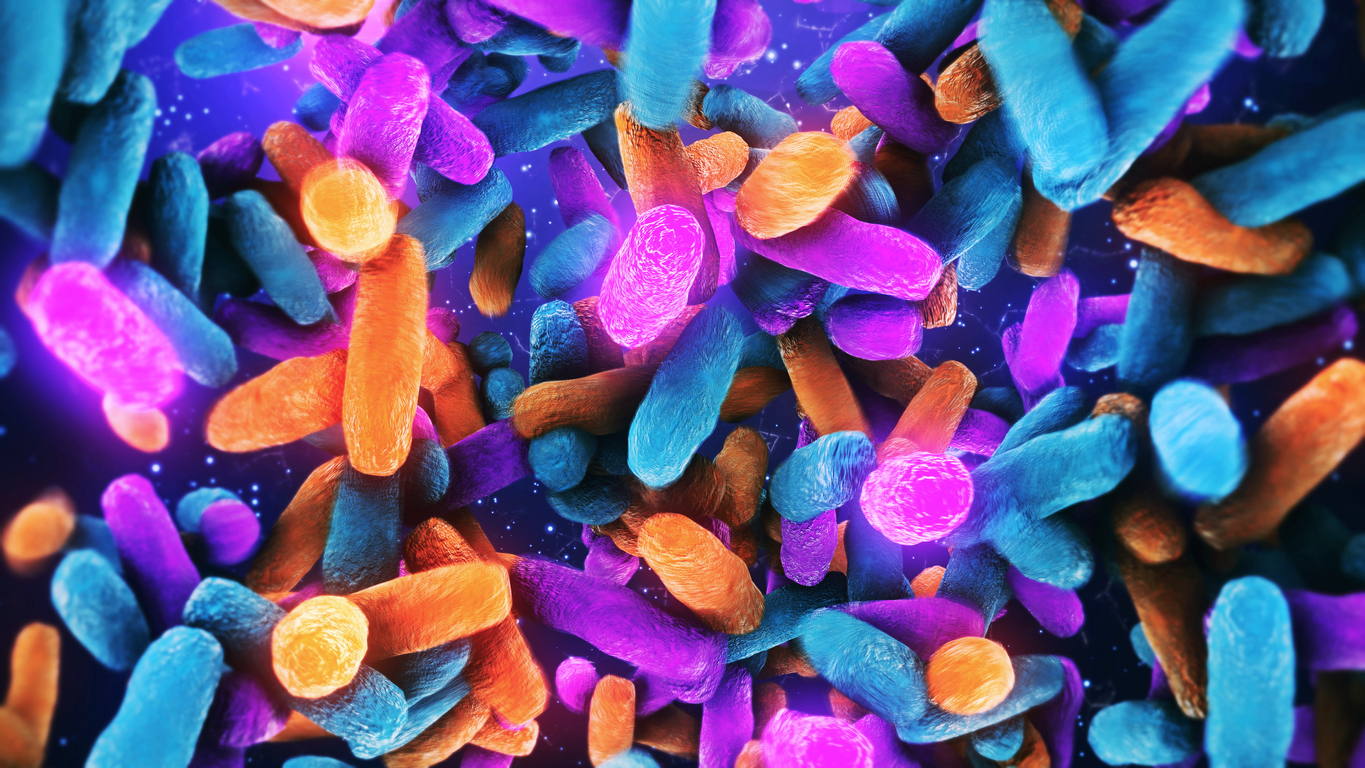
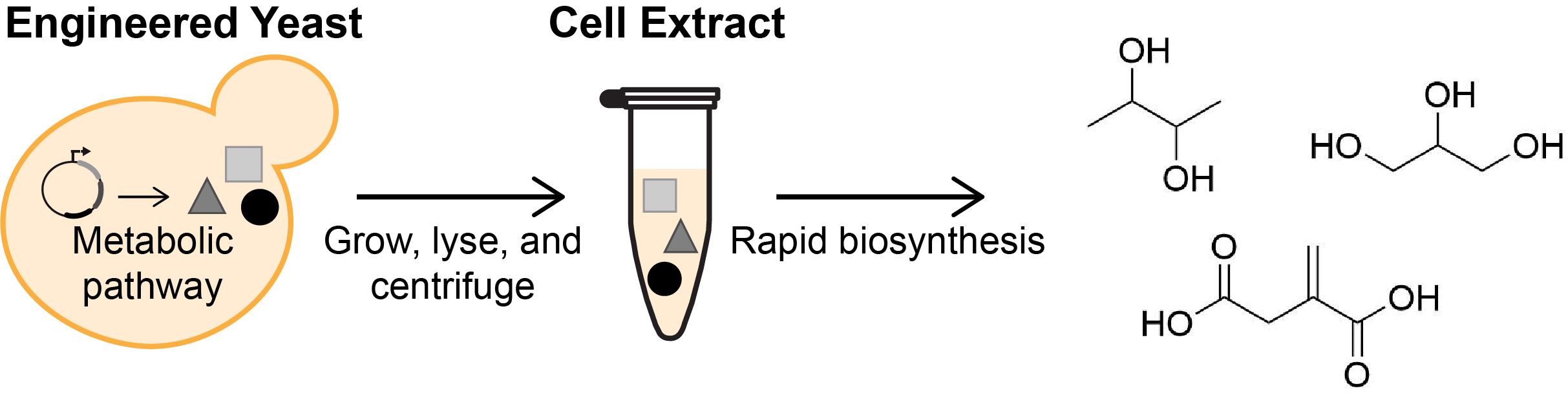
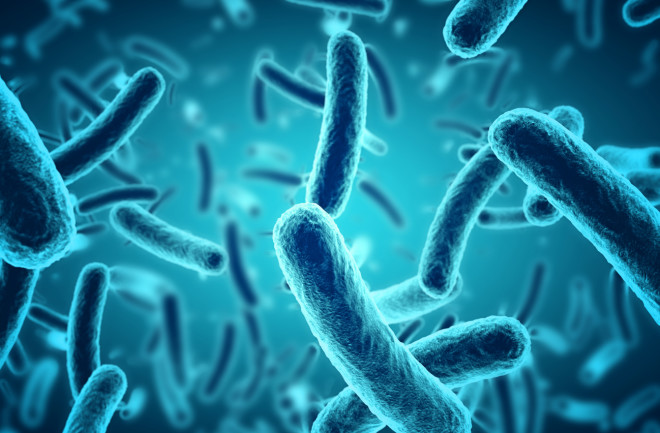
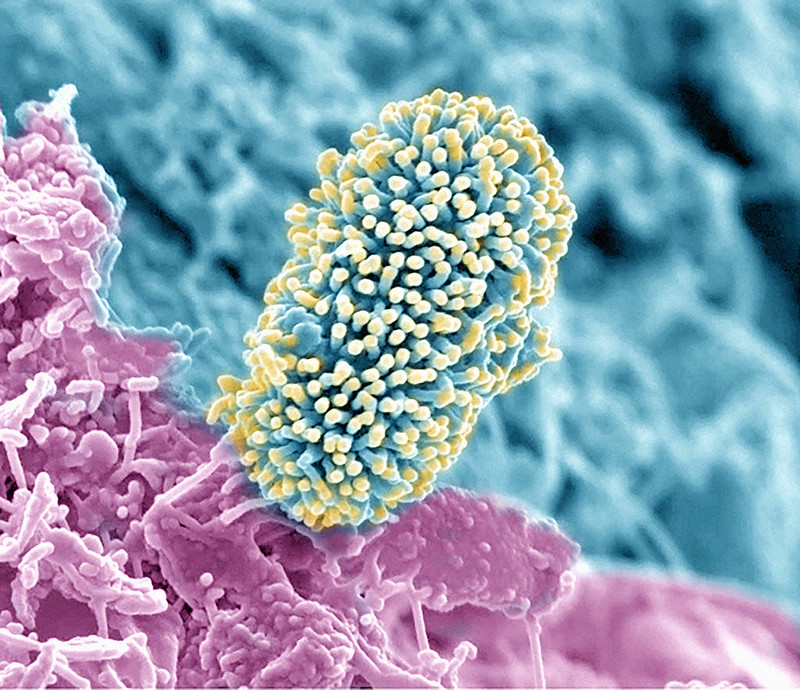
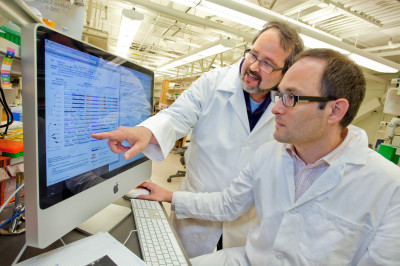
green and red light patterns against a black background EGSB logo A rendering of Lactobacillus, a type of beneficial bacteria found in the human intestine microbiome. (Credit: nopparit/iStock) blue background with white text and science icons Illustration by Jenny Nuss/Berkeley Lab Yeast strains engineered for the biochemical conversion of glucose to value-added products are limited in chemical output due to growth and viability constraints. Cell extracts provide an alternative format for chemical synthesis in the absence of cell growth by isolating the soluble components of lysed cells. By separating the production of enzymes (during growth) and the biochemical production process (in cell-free reactions), this framework enables biosynthesis of diverse chemical products at volumetric productivities greater than the source strains. (Blake Rasor) A soil bacterium on the root surface of an Arabidopsis plant. Courtesy of Pacific Northwest National Laboratory Adam Arkin and Dylan Chivian in the lab at Hildebrand Hall on UC Berkeley campus. (Photo by Roy Kaltschmidt, Berkeley Lab)

Was this page useful?

Send
like not like