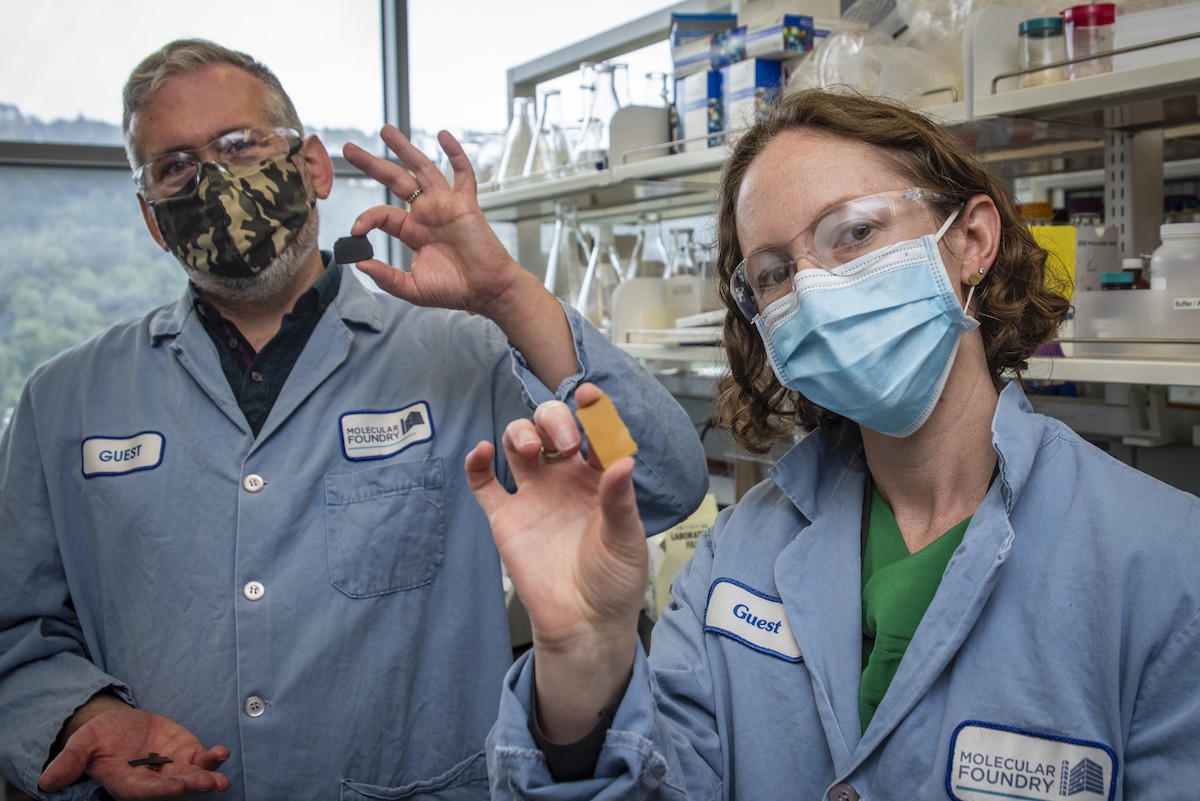
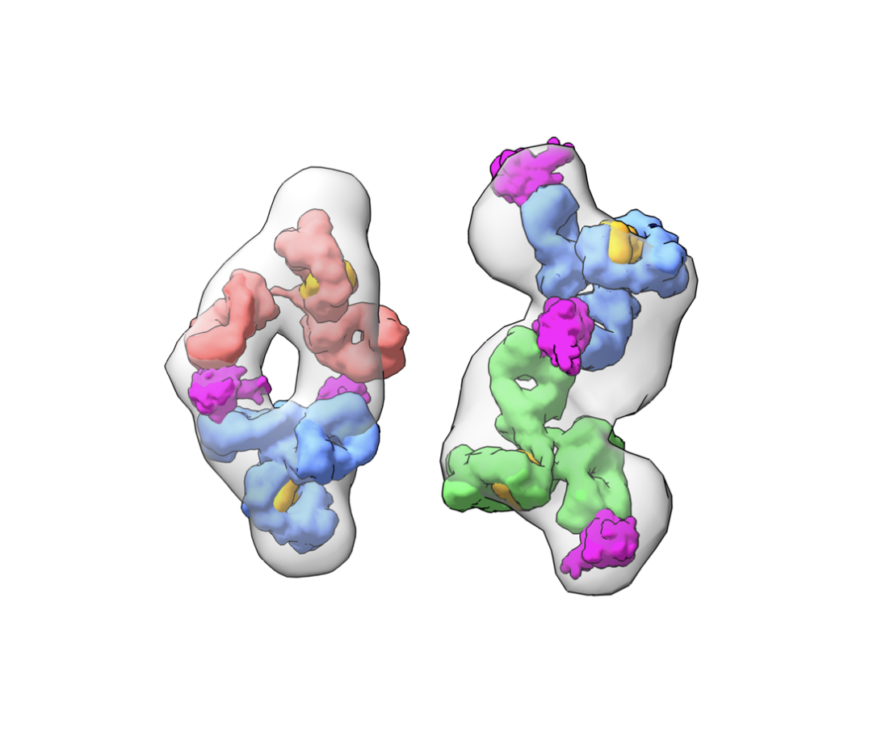
Aerial photo of the switchgrass diversity panel late in the 2020 season at the Kellogg Biological Station in Michigan. (Robert Goodwin) Three nanobodies (blue) are shown bound to the tip of the SARS-CoV-2 spike protein (red/pink). The nanobodies were engineered to be extremely effective at blocking the virus from entering a host cell. (Credit: UCSF) An amazing new material called an avalanching nanoparticle, which was co-developed by researchers in Berkeley Lab’s Molecular Foundry, is featured in a cover story of the Jan. 14 edition of the world-renowned scientific journal Nature. A ribbon diagram rendering of the ORF8 structure predicted by AlphaFold 2 (blue), overlaid onto the actual structure (green) determined by the UC Berkeley-led team. (Credit: DeepMind) Soft X-ray tomography provides a map of organelles within an intact cell. (Credit: Katya Kadyshevskaya/USC) Artistic interpretation of CheckV assessing virus genome sequences from environmental samples. (Rendered by Zosia Rostomian​, Berkeley Lab) Unicellular algae in the Chlorella genus, magnified 1300x. (Andrei Savitsky) Collage of partial Bragg spots recorded during experiments at the XFEL. For each pixel in the `shoe-box' of a given Bragg spot, diffBragg applies precise modelling of the various parameters affecting their shape and intensity.

Was this page useful?

Send
like not like