
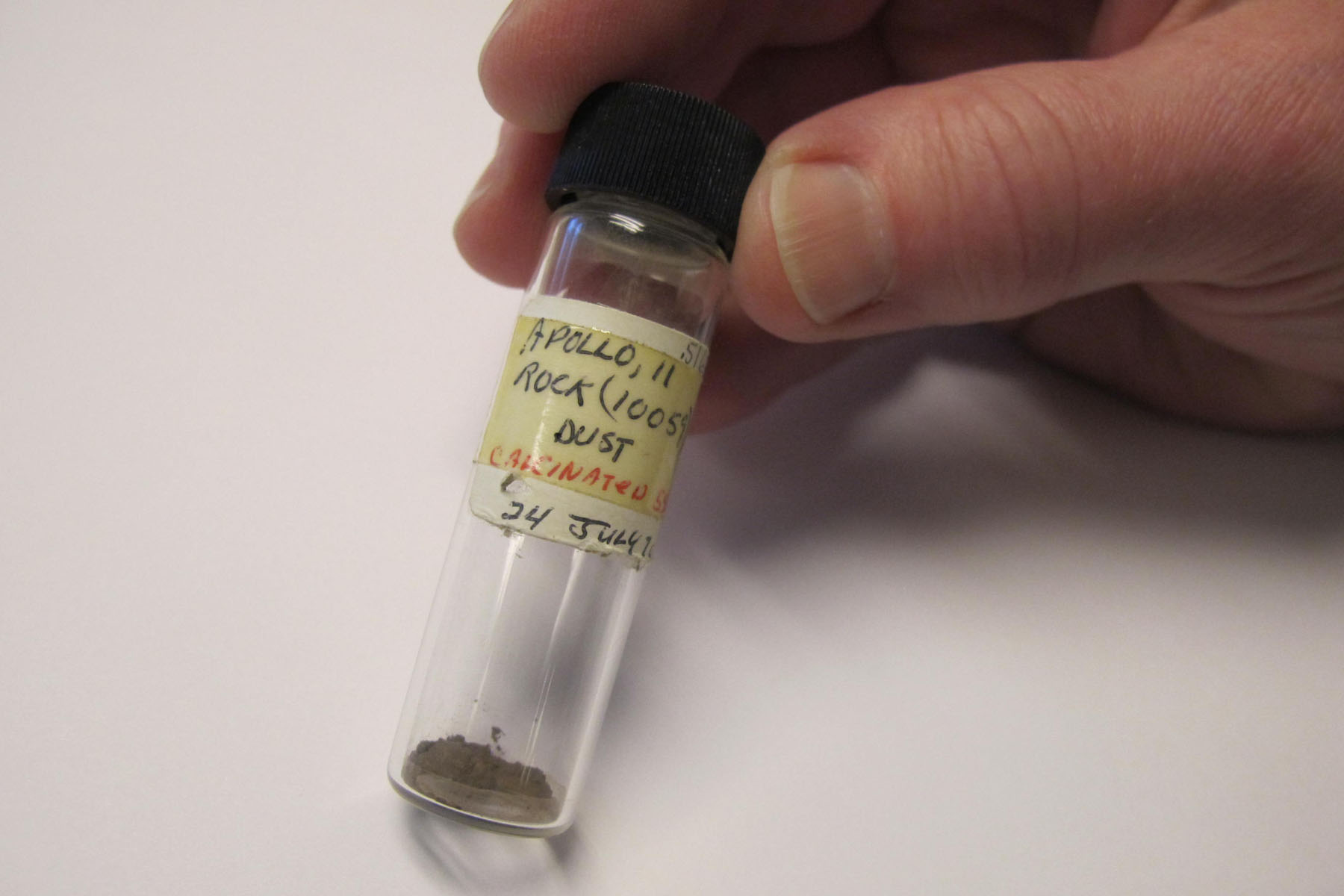
During the historic Apollo 11 mission, astronauts Neil Armstrong and Buzz Aldrin collected a bounty of geologic samples from the moon’s surface. These treasures were brought back to earth and divvied up among 150 laboratories worldwide. One of these labs was the Space Sciences Laboratory in Latimer Hall on the UC Berkeley campus. Scientists at the lab, including Nobel laureate Melvin Calvin, were given moon rocks and soil samples by NASA in the hopes they could find evidence of extraterrestrial life within them. “Calvin was looking for the precursors to DNA,” recalled Scott Taylor, a retired Berkeley Lab biologist who worked in Calvin’s lab as postdoctoral researcher. Although Calvin didn’t find what he was looking for, he and his team were able to characterize the carbon compounds found in the samples, which helped scientists better understand the moon’s chemical composition. The samples Calvin and his team studied should have been sent back to NASA in the 1970s, but they somehow wound up in storage, where they sat collecting dust until they were discovered in 2013 by a Berkeley Lab archivist (they have since been returned to NASA). It is rumored that before all the samples found their way into storage, a rock or two spent some time on display in Calvin’s office. ⬢
Written by Annie Roth, a science journalist, filmmaker, and children’s author. Research and interviews conducted by Peter Arcuni, a journalist and radio/podcast producer.


