
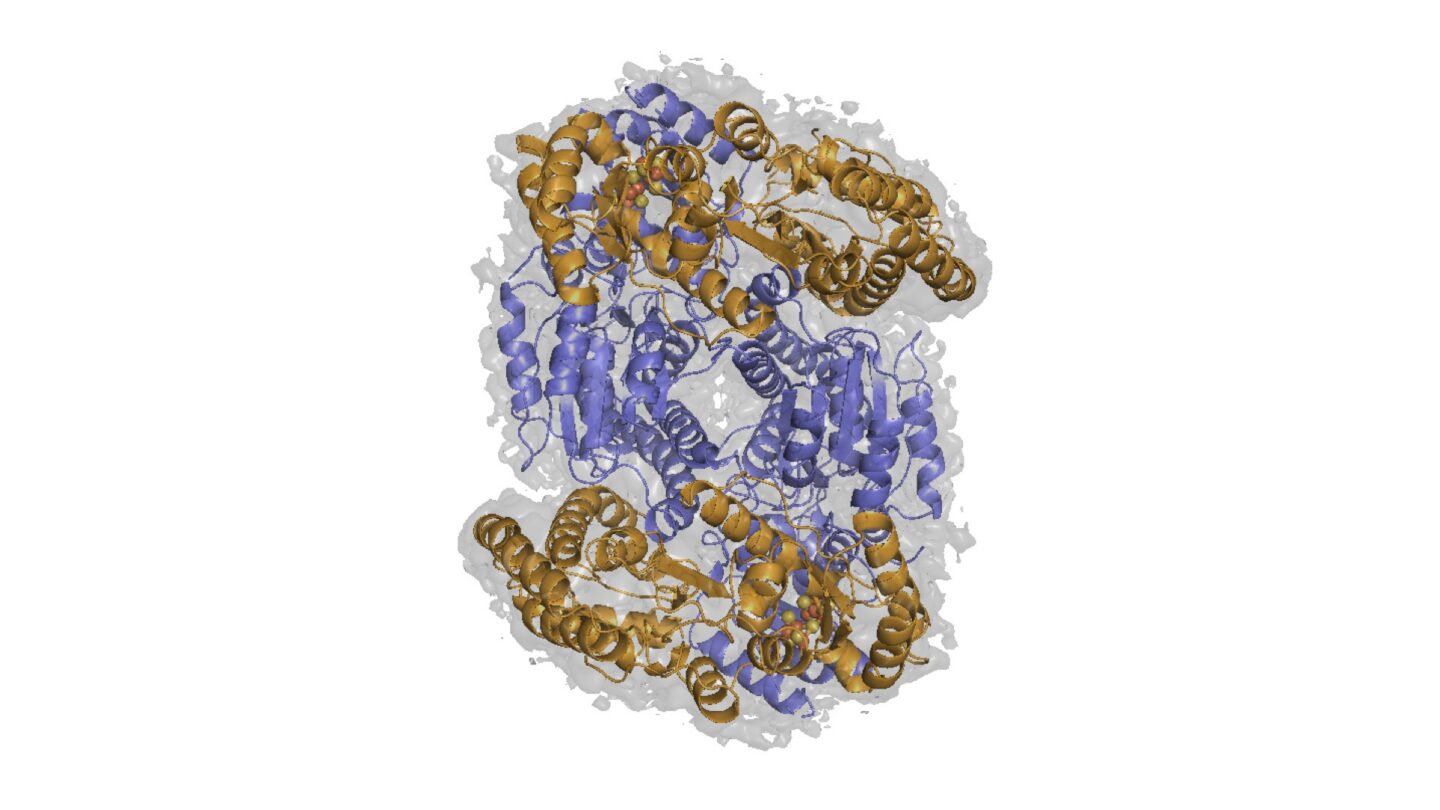
Bacteria use enzymatic machinery to harvest sulfur from the atmosphere. Beyond bacteria, this enzymatic machinery has potential as an industrial workhorse. As these enzymes cleave the sulfur from gasses, they also produce hydrocarbons, the building blocks of many of our fuels and materials.
With an eye to harnessing these nitrogenase-like enzymes, researchers have recently characterized a specific enzyme, Methylthio-alkane Reductase (MAR) in host bacteria Rhodospirillum rubrum. Their work in Nature Catalysis details an enzyme system that was previously only understood at a genetic level.
Functional and structural experiments showed how the enzyme operates. It works as a two-part complex, along with a regulatory accessory protein and multiple metallocofactors. Given the MAR system’s potential to function as chemical Clydesdales, each piece of understanding paves the way for optimizing production of chemicals and plastics with this system. Read more on the JGI website.


