
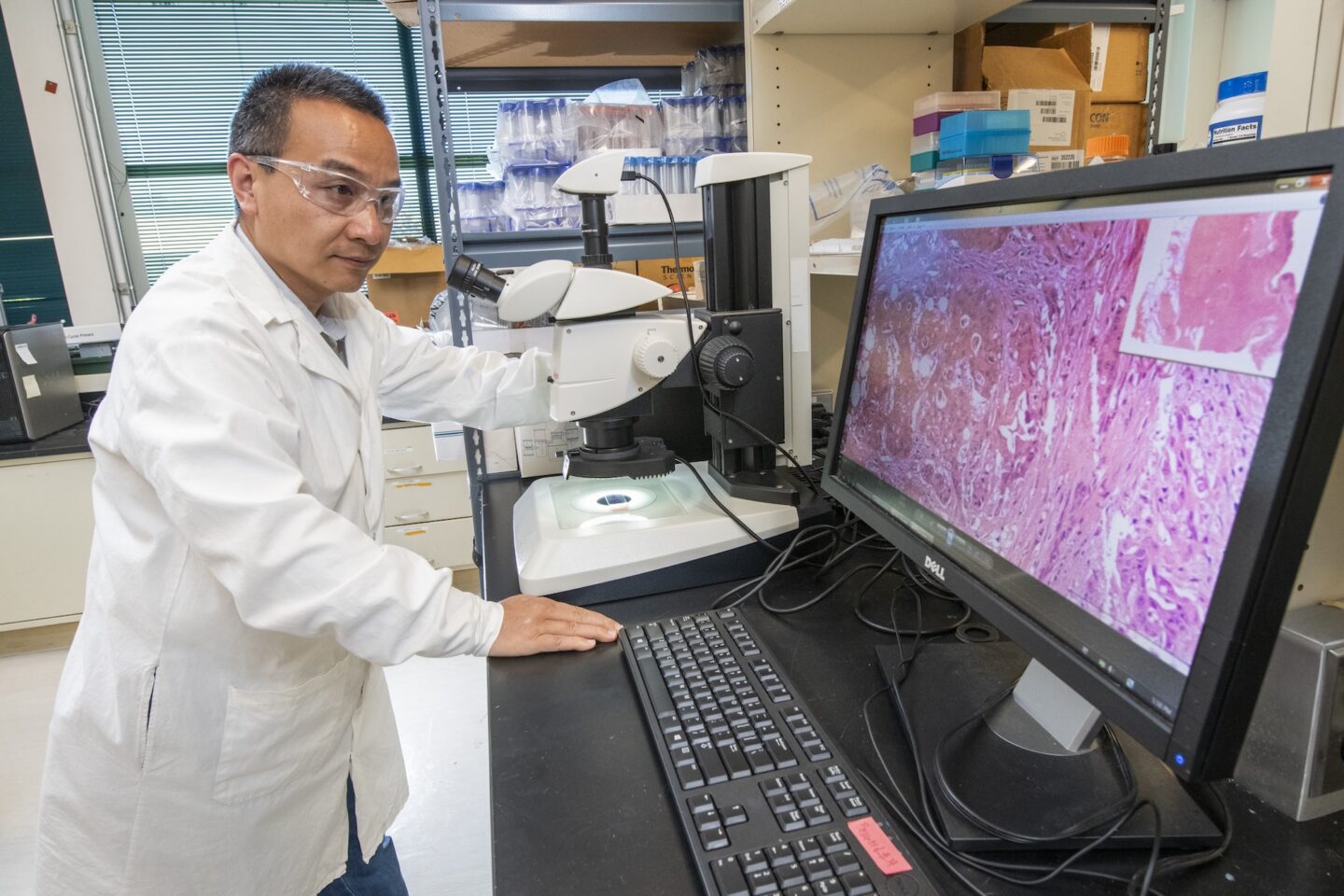
Rapidly identifying and quantifying exposure is essential for determining what treatments or monitoring are necessary for people who might come into contact with radiation. Scientists in the Biological Systems and Engineering (BSE) Division have developed a machine learning tool that can detect and estimate past radiation exposure using the information in a standard complete blood count, or CBC, one of the most routinely performed clinical blood tests.
“We were motivated by a simple question: Do routine blood tests retain information about a person’s prior radiation exposure?” said Jamie Inman, a BSE research scientist who co-led the study with Hang Chang, a computational staff scientist in BSE, and Jian-Hua Mao, a geneticist senior scientist in BSE.
The tool, named “Sparse CBC,” is now available open source on Zenodo, and the team is optimistic it can be adapted for use in humans. A study about the model was recently published in Nature’s Communications Medicine journal.
The team tested the model using previously published CBC results from a population of mice that were engineered to mirror the genetic diversity of humans. These specially curated mouse strains capture a broad range of genetic variation and allow researchers to investigate how genetic background influences biological responses. They found the model maintained a good predictive ability, but the performance was lower and varied across mouse strains — indicating, as predicted, that genetic background changes the radiation response signature present in CBC data.
Read the in the Berkeley Lab News Center.


