
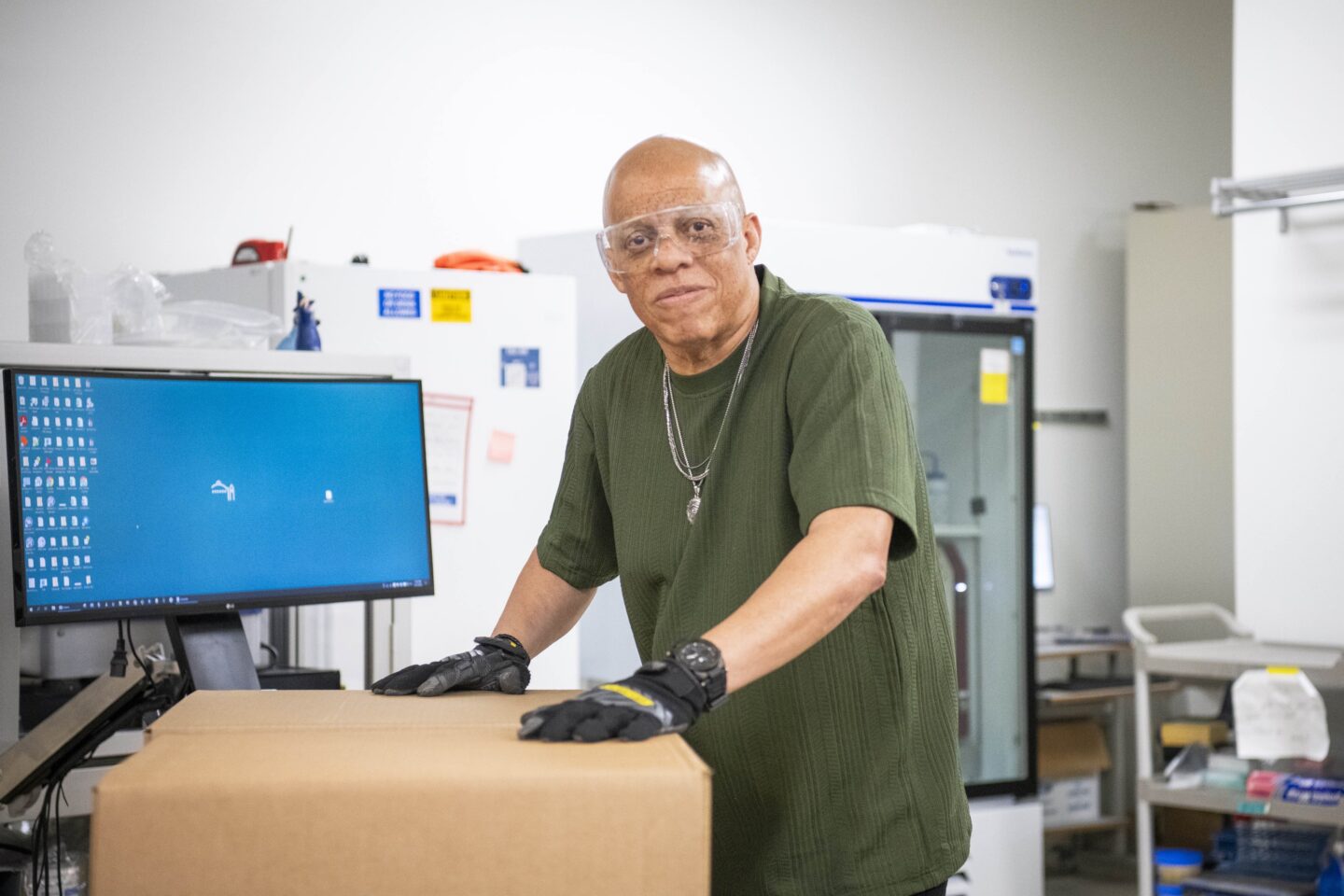
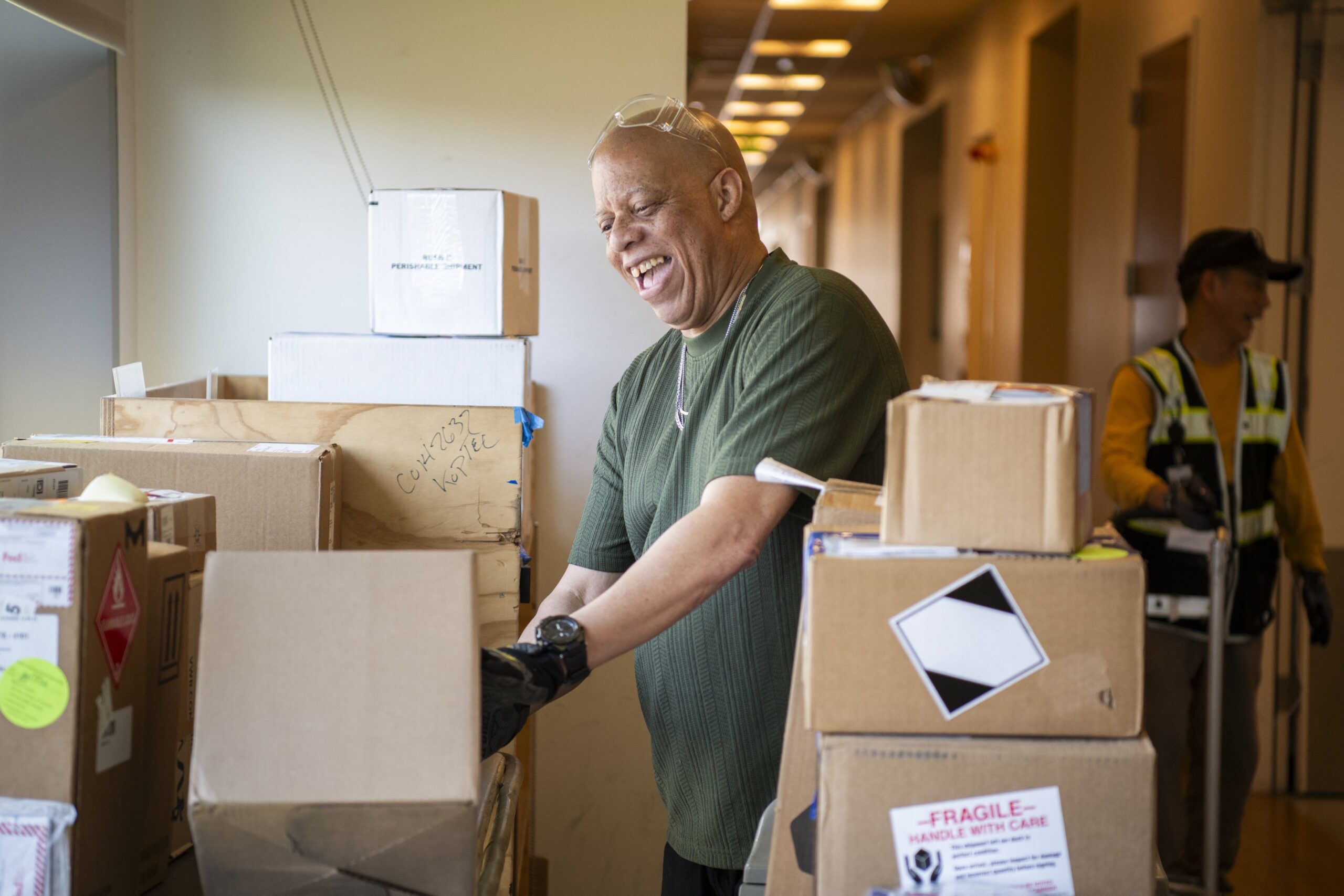
A regular day-to-day routine at work doesn’t really exist for Sadiki Showers. As a material handler for the Joint BioEnergy Institute (JBEI), Showers is in charge of shipping and receiving materials required by all of the research and staff at JBEI. Each day brings a plethora of projects as he attends to his wide-ranging responsibilities.
Recently, he was tasked with shipping a plant to the Pacific Northwest National Laboratory in Washington state. “It doesn’t seem like that big of a deal,” Showers said, “but when you get down to it, shipping a living plant that’s part of an intricate experiment isn’t so easy.”
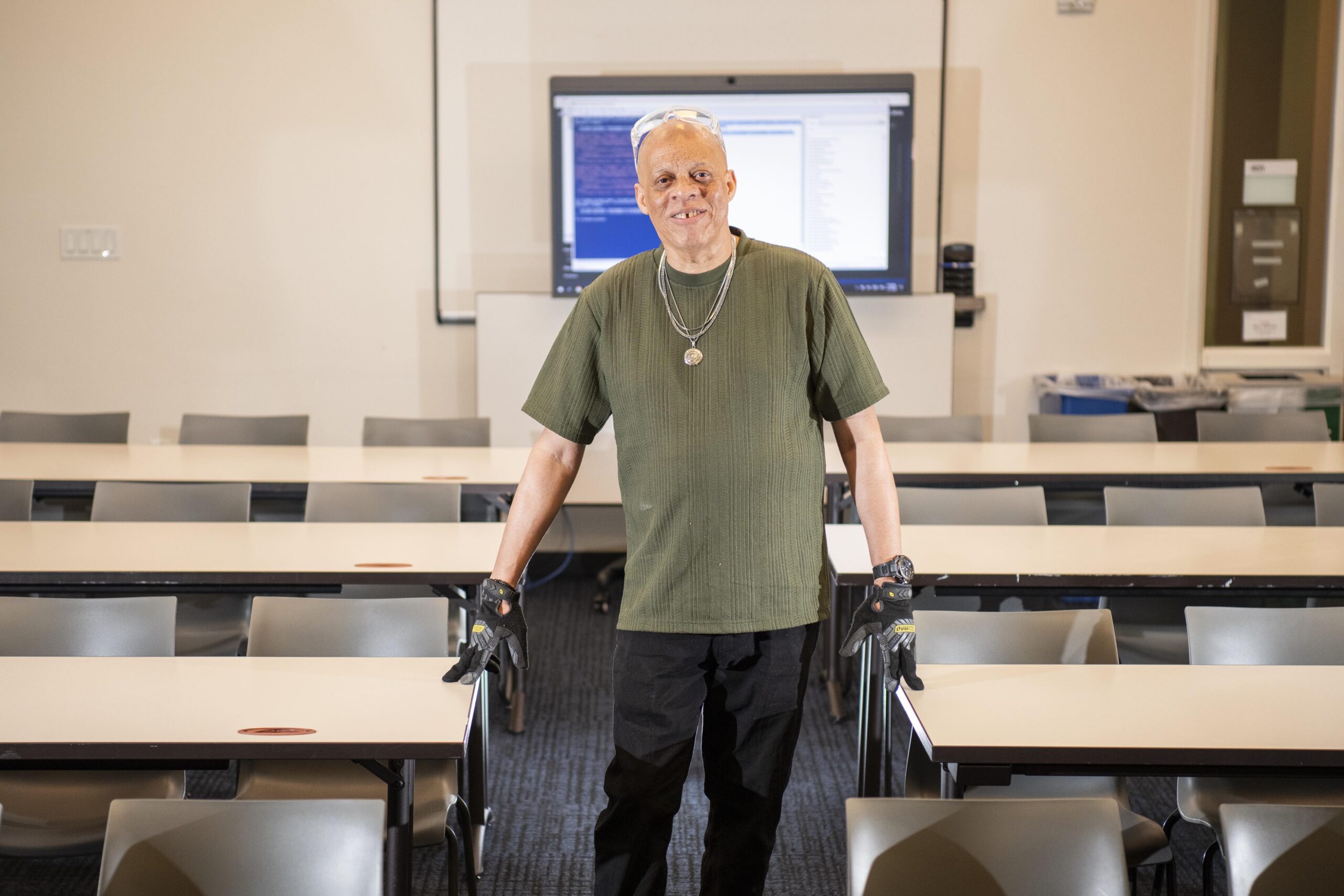
He also oversees the setup of conference rooms and spaces in the building for JBEI events. His work is often behind the scenes, yet it directly impacts the more visible breakthroughs and achievements of the group. Showers’s dynamic role keeps him on his toes and doesn’t come with a guidebook: “I’m always learning, always trying to figure new things out,” he said.
JBEI regularly hosts scientists and researchers from around the world who are interested in biofuel production, which means that a lot of different experiments, materials, and cultures all come together under one roof. To keep track of the international crew, Showers and his colleagues place pushpins on a world map and he enjoys getting to know the far-off countries through the international researchers visiting and working at JBEI. “I don’t have to travel the world! I get to learn all about it right here,” he said.
Promoting His Own Path
Interacting with a constantly changing set of cultures is something that Showers does with ease and, usually, a big smile. It’s a skillset he attributes to his previous career in hip hop music and upbringing in Harlem, New York.
The early 1960s was a vibrant time in that neighborhood’s history and Showers’s earliest memories are filled with people from different backgrounds and cultures. At a young age, he remembers seeing monumental figures like Malcolm X giving speeches and sharing his philosophies around the neighborhood.
“My family and I weren’t political,” he said, “but seeing Malcolm when I was a little kid really broadened my perspective of the world.”
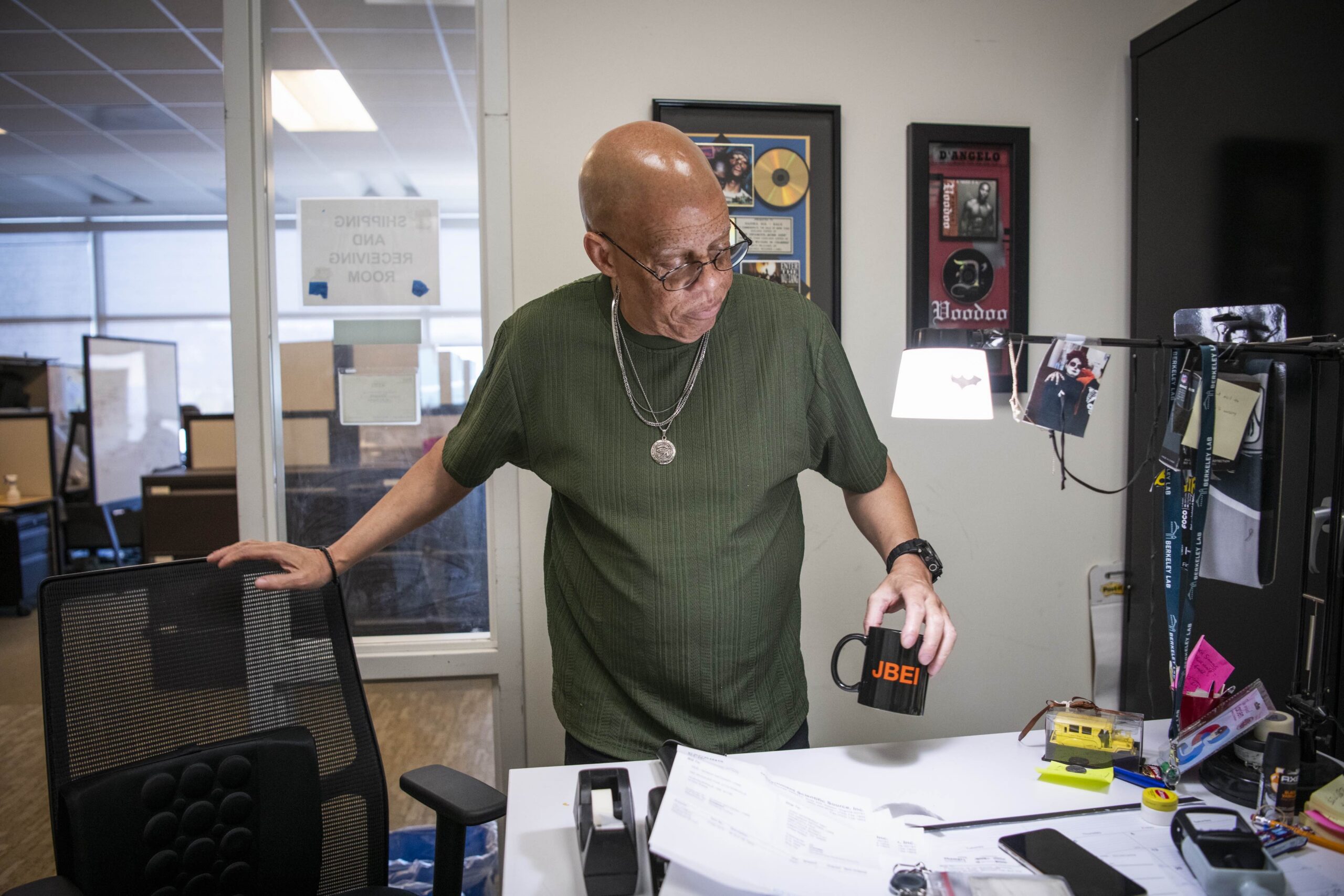
Showers’s mom worked at Harlem’s legendary Apollo Theater and he remembers watching in awe as musicians and dancers performed on stage. He turned this exposure and interest in music into his first career. In the early 1970s in New York City, hip hop as a music genre was in its infancy and Showers was attracted by the opportunities to get involved.
Through pivotal mentors, Showers learned how to promote an album and its artist by connecting musicians to radio stations and local retail opportunities to boost sales. Before the days of the internet and online music streaming services like Spotify and Pandora, record labels and musicians depended on promoters to help get songs onto the airwaves of radio stations. So as a street promotor, Showers would drop vinyl records off at radio stations and help to coordinate musician interviews and video shows. He would set up retail displays for an artist’s visit and facilitate introductions between different groups to help broadcast hip hop across the airwaves.
Showers carved out his own path in the music industry, eventually brushing shoulders with such high-profile performers as Jermaine Dupri and Michael Jackson. He moved to the Bay Area in 1980 and continued working in the music world. For nearly a decade, Showers helped to manage sales and music selections based on the interests of the local community at Leopold’s Records in Berkeley. He also got involved with a few radio stations in the area and eventually, began co-hosting a reggae-focused radio show on Bay Area hip hop radio station, 106.1 KMEL.
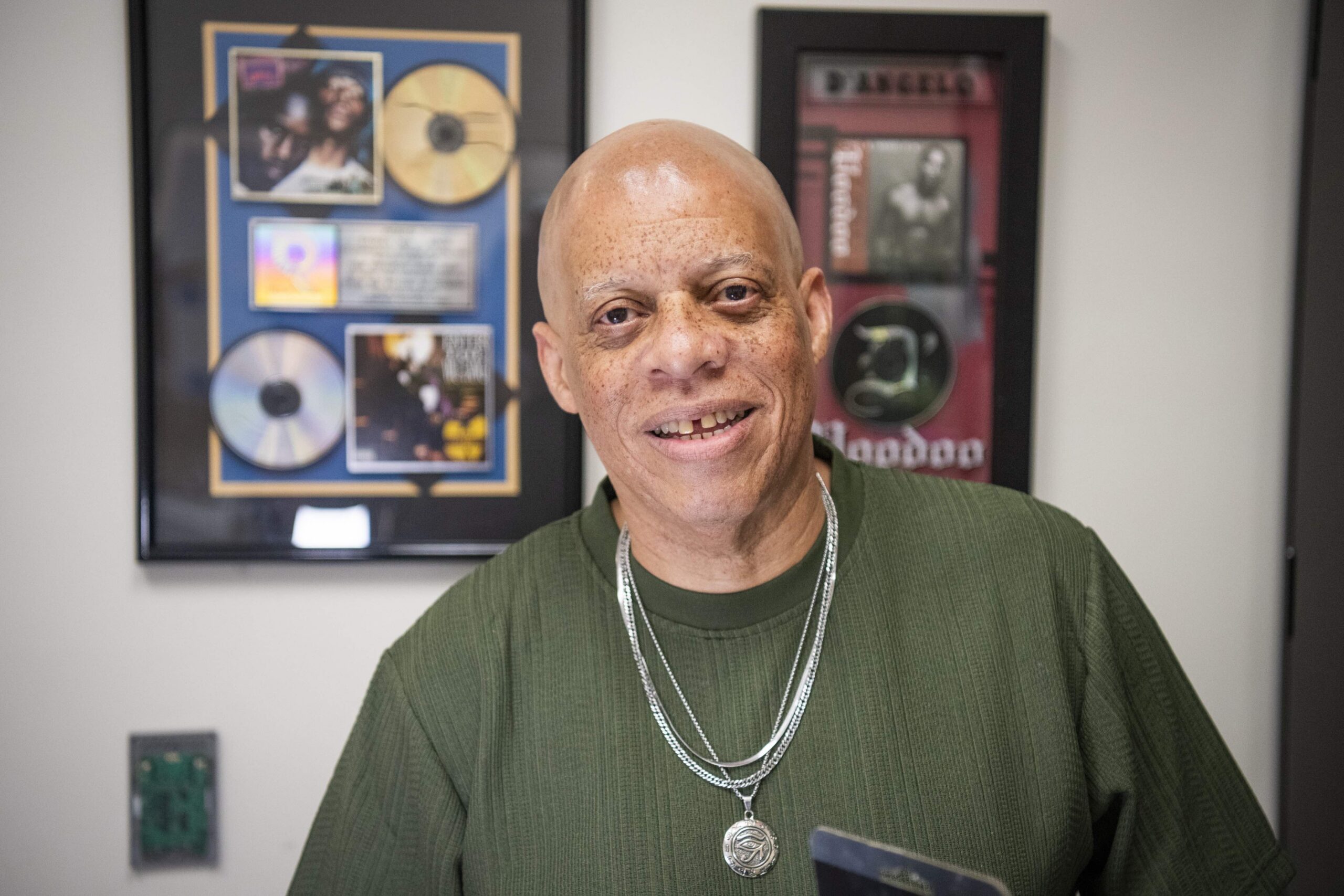
Music continues to be a cornerstone in Showers’s life today—relaxation on the weekend almost always includes time with family and listening to a vinyl record at home. It’s not uncommon for him or his wife to hop on their turntables, spinning and blending different songs and genres depending on the occasion.
His personal archive, which contains upwards of 2,000 albums, includes records from his days in the music industry and well beyond, Still, Showers prefers listening to the music written and published online by his kids while he works. His two sons, both in their early twenties, and three daughters, all in their forties, live in the Bay Area. Mentoring his kids and nurturing their interests in playing instruments and singing is how Showers prefers to connect with music these days.
By the 2010s, the way that music was being promoted changed. “Hip hop thrived because of mixtapes and radio stations, but once streaming music became possible, it destroyed the market for promotion,” Showers said. The content of hip hop music shifted as well. “With the internet, artists could curse and say whatever they wanted.” He decided it was time to pivot into a new direction. “It was a great adventure, but I was ready to transition to something different,” he said.
Bridging Hip Hop to Berkeley Lab
Showers first learned about Berkeley Lab over 16 years ago through a temporary opportunity in the Salvage department. “I didn’t know much about the science here, but I knew that this role would be a great chance to learn more,” he said.
Collecting and sorting the refuse of Berkeley Lab’s 4,000 employees is no small feat, especially when it comes to the proper disposal of electronics, metal, and hazardous chemical waste. His colleagues were friendly and Showers took to the work quickly. A few years in, he was offered a role on the Facilities team and, eventually, accepted the material handler position with JBEI.
As a Department of Energy Bioenergy Research Center, JBEI brings together the expertise and resources of four national laboratories, as well as academic and industry partners, to transform non-food plant material, also known as biomass, into biofuels and bioproducts. As a plant grows, it converts sunlight into energy that’s stored in all of its structural material—from its leaves and branches down to the roots. After a plant has been harvested, that leftover plant matter contains energy-rich material that can be used to power our everyday lives.
The living plant that Showers was asked to ship to another state was a critical piece in a long-term experiment. To ensure that it arrived safely—and, most importantly, alive—he built a bespoke box with custom padding inside to ensure the plant stayed upright and rigged an apparatus to maintain adequate hydration. After arranging for a seamless overnight delivery, Showers breathed a satisfied sigh of relief when the recipient confirmed that all was well with their newly received specimen.
The tunes of today’s up and coming artists, coupled with the optimistic, can-do attitude he honed on the streets of New York City and refined throughout his interactions with musicians over the years, continues to be the right approach for Showers at JBEI. “It can be complex, with all of the different types of interactions and types of things I have to do throughout the day,” he said. “But these experiments and this work is too important––you just gotta make it happen.”
Written by Ashleigh Papp. As a communications specialist for Berkeley Lab’s Biosciences Area, Papp spotlights the people and stories behind our latest research.
Read other profiles in the Behind the Breakthroughs series.


