
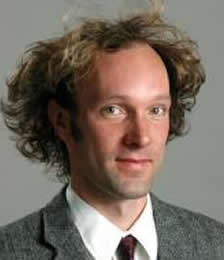
Daniel A. Fletcher
Biologist Faculty Scientist
Chair and Professor, UC Berkeley Department of Bioengineering
Building: 922, Room 608
Mail Stop: STANLEY
Phone: (510) 643-5624
DAFletcher@lbl.gov
http://fletchlab.berkeley.edu
Links
Research Interests
My laboratory studies the mechanics and dynamics of cell movements on the purified protein, single cell, and tissue levels. For these studies, we are developing new instruments to quantify cell and molecular mechanics based on optical microscopy, force microscopy, and microfabrication.
Recent Publications
Related News
Fletcher Elected to the National Academy of Medicine
Dan Fletcher is being recognized for the development of a mobile phone–based microscopy tool and greater contributions to our understanding of cell movement.
Congratulations 2021 Chan Zuckerberg Biohub Investigators
Four faculty scientists in the Biosciences Area were included in The Chan Zuckerberg Biohub Investigator Program, awarding $21 million to 21 University of California, Berkeley researchers.
Nitric Oxide Is the Key for Building Breast Tissue from Single Cells in 3-Dimensions
Building on four decades of research, Mina Bissell, Distinguished Scientist in Biological Systems and Engineering (BSE) Division and her colleagues have demonstrated a dynamic reciprocity between the extracellular matrix (ECM) and cell nucleus for tissue-specific gene expression. Using the 3D ECM gel to study signaling from outside the cell to the nucleus they have unraveled a dozen different pathways critical for the formation of phenotypically normal breast tissue. The signaling between the ECM and the nucleus is pivotal, bidirectional, and intricate. In two papers published in eLife this week, Bissell and Dan Fletcher, BSE faculty scientist and Purnendu Chatterjee Professor and Chair of Bioengineering at UC Berkeley, shed new light on how the extracellular matrix communicates with breast cells to generate nitric oxide, forming a loop that influences the pathway a single cell takes to form breast tissue.


