
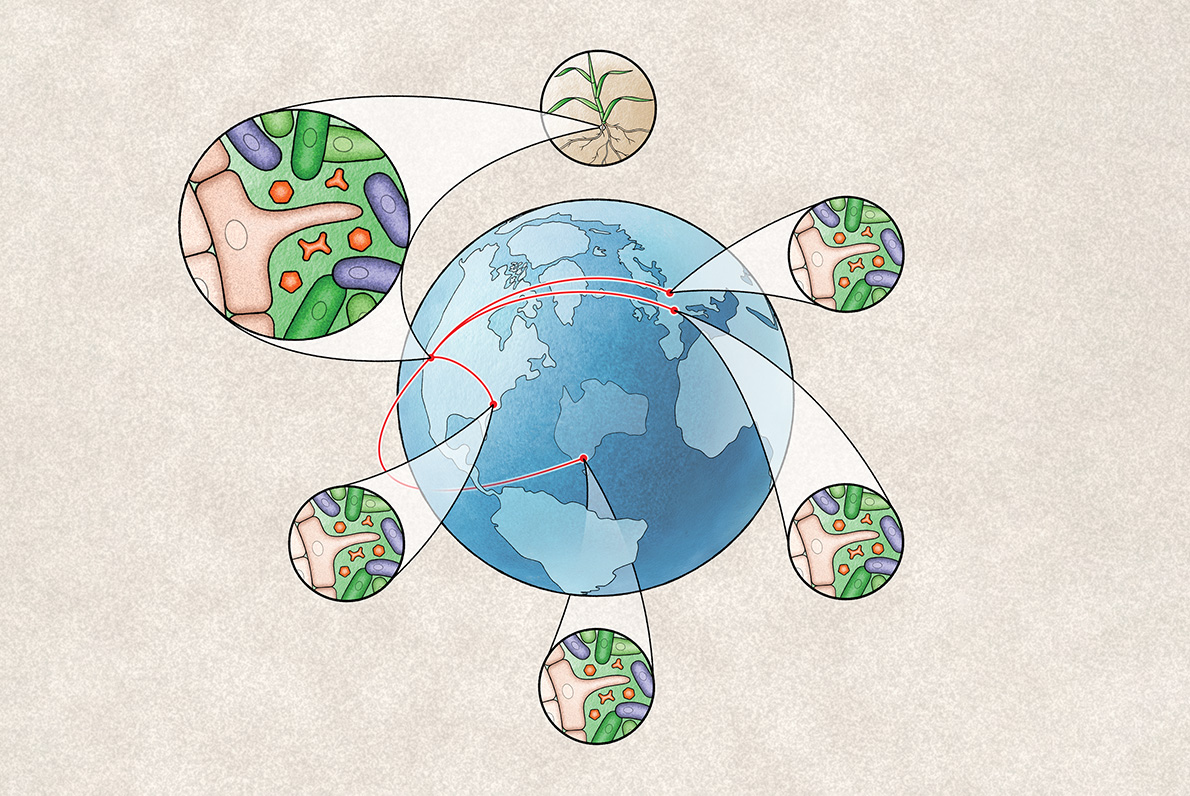
Plant microbiomes play important roles in farming and the environment. The right microbes can help plants fight disease, grow in poor soil, and help build soil organics. But without a common system to study them, results from different labs have often been difficult to compare. In a recent paper published in PLOS Biology, Biosciences Area researchers led an international consortium of scientists to study whether small plastic growth chambers called EcoFABs could help solve the problem of reproducibility in studies of plant-microbe interactions.
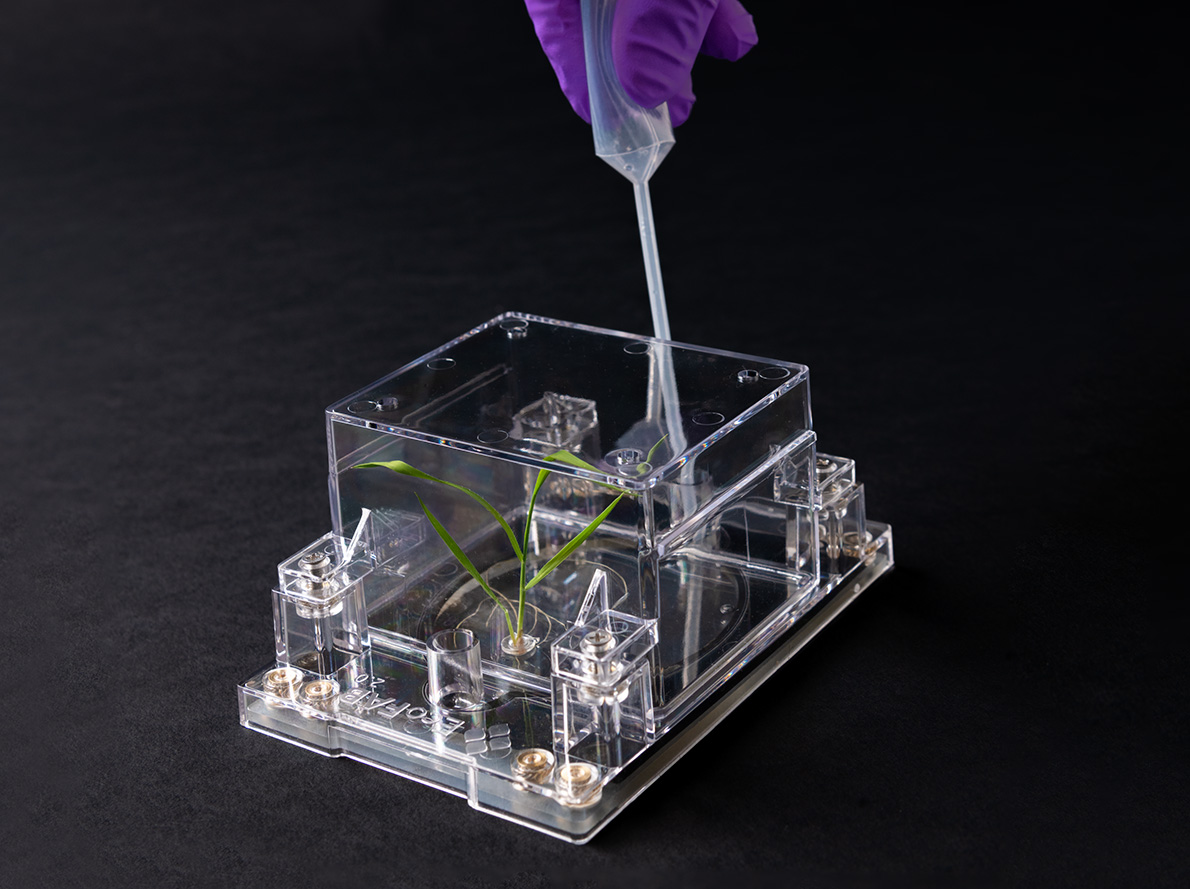
Building on their previous work with microbe-free plants, the scientists used the Berkeley Lab-developed devices to run identical plant–microbe experiments across labs on three continents and got matching results. The breakthrough shows that EcoFABs can remove one of the biggest barriers in microbiome research: the difficulty of replicating experiments in different places.
Because training artificial intelligence (AI) models requires consistent information, the ability to generate big, reliable datasets is especially valuable for AI. With EcoFABs, scientists can feed AI clean data on how microbes affect plants and start to build models that predict what might happen in the real world.
Read more in the Berkeley Lab News Center.


