
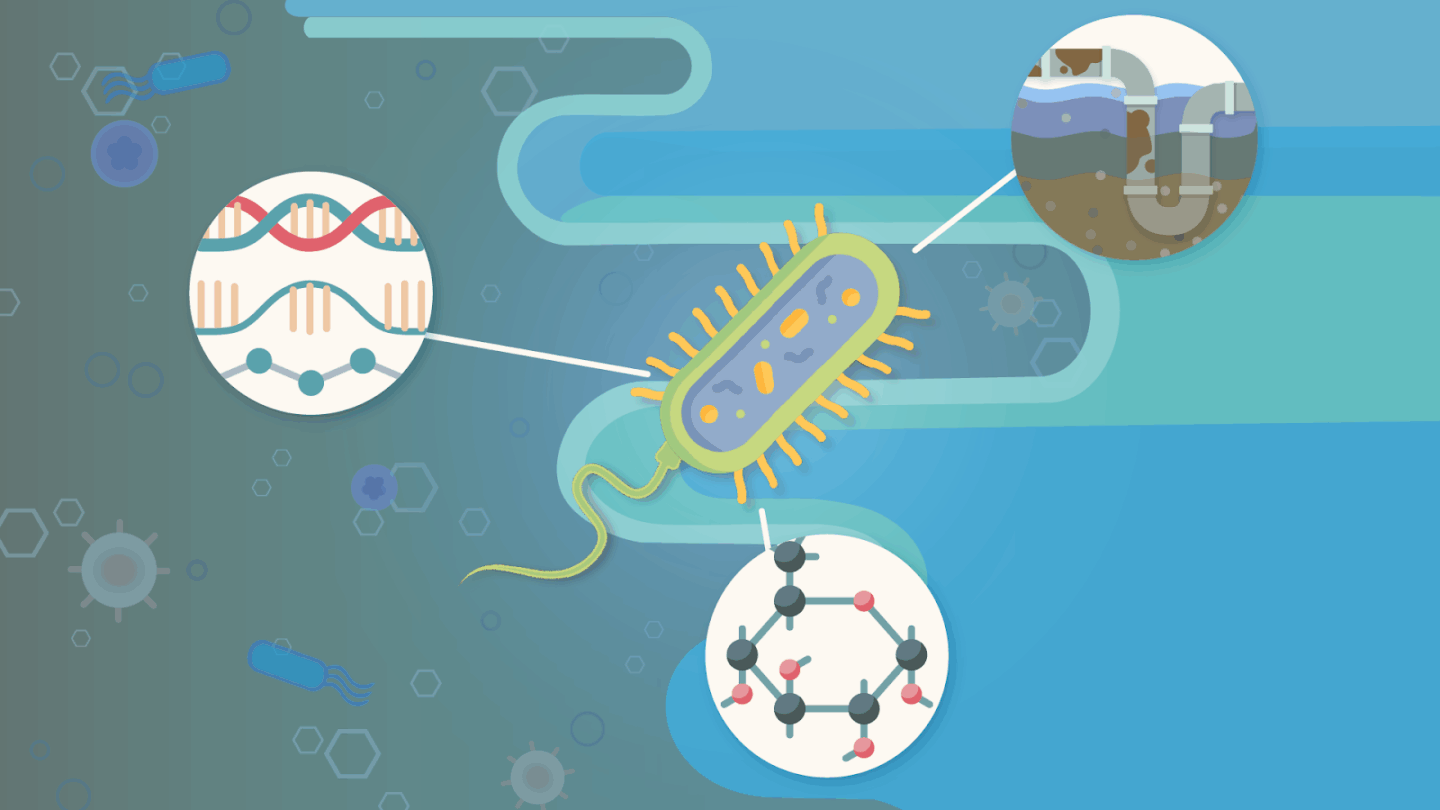
Extracting oil and gas from beneath Earth’s surface involves a lot of water. Produced water (PW), which exists naturally underground and is pumped to the surface during the oil and gas production process, is contaminated with salts, industrial chemicals, and hydrocarbons—the building blocks of oil and natural gas. Only about 1% of the billions of gallons of PW are reused, and the rest is discarded. Berkeley Lab scientists are trying to change that with the help of contamination clean-up experts: microbes.
A new paper published in Microbiology Spectrum describes a study that investigated the genes and traits of Iodidimonas, a group of bacteria known to be abundant and thriving in systems that treat PW. The team of researchers from the Earth and Environmental Sciences Area (EESA) and the Biosciences Area—led by senior scientist Romy Chakraborty, postdoctoral researchers Yuguo Yang and Shwetha Acharya, and senior scientist Susannah Tringe—found that these microbes have specific genes that help them survive in salty, toxic environments, but surprisingly don’t directly break down hydrocarbons.
“Our findings indicate different types of bacteria involved in PW treatment might work together,” said Chakraborty. “Iodidimonas may not degrade hydrocarbons, but it may be an important type of microbe that balances other communities that do by breaking down byproducts and consuming other microbes.”
Read the full article on the EESA website.


